


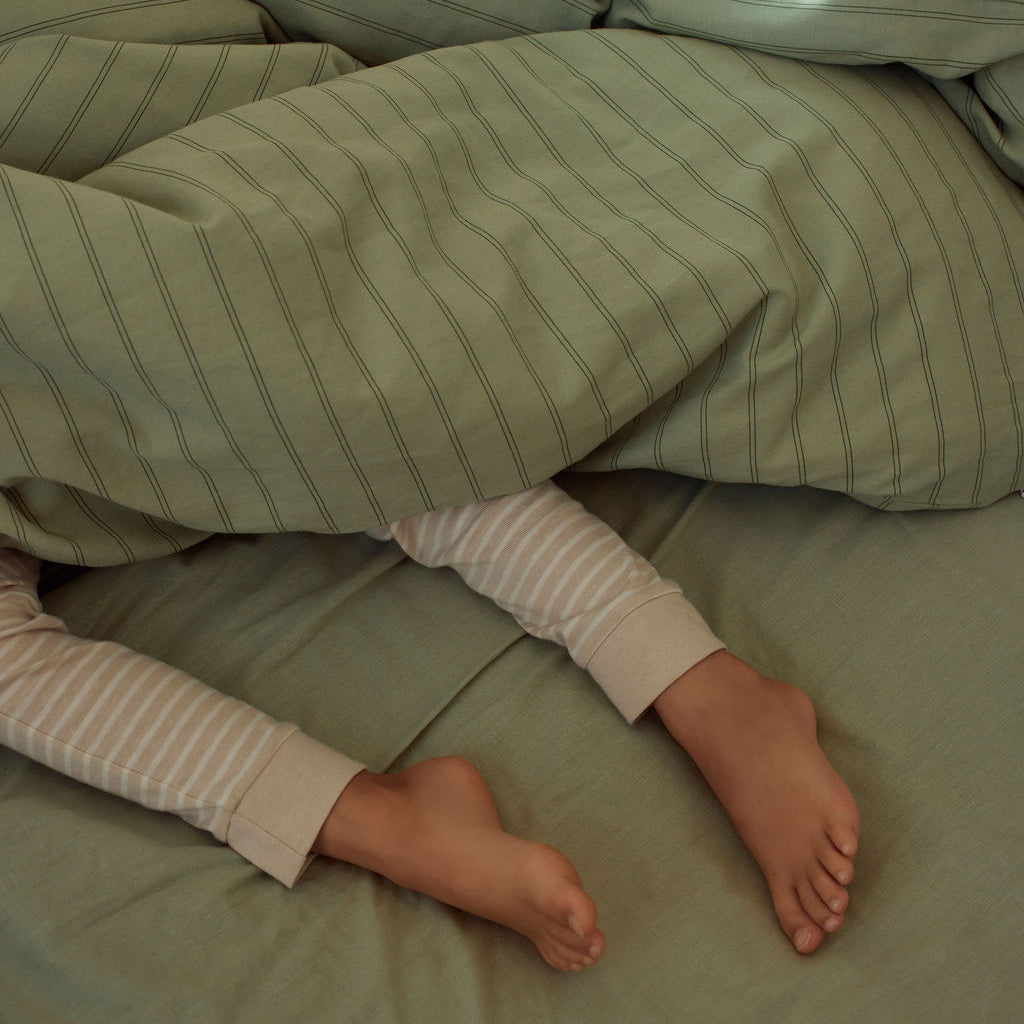
If your child sleeps hot, you'll probably know about it.
Maybe they:
- Kick their covers off
- Wake with sweaty hair or body
- Toss and turn more when the weather warms up
- Refuse heavier pyjamas or blankets
- Sleep better with the window open
- Wake during the night feeling clammy
- Seem perfectly comfortable while you're wondering how they're not freezing
But here's the interesting part:
The temperature of the room is only one piece of the puzzle.
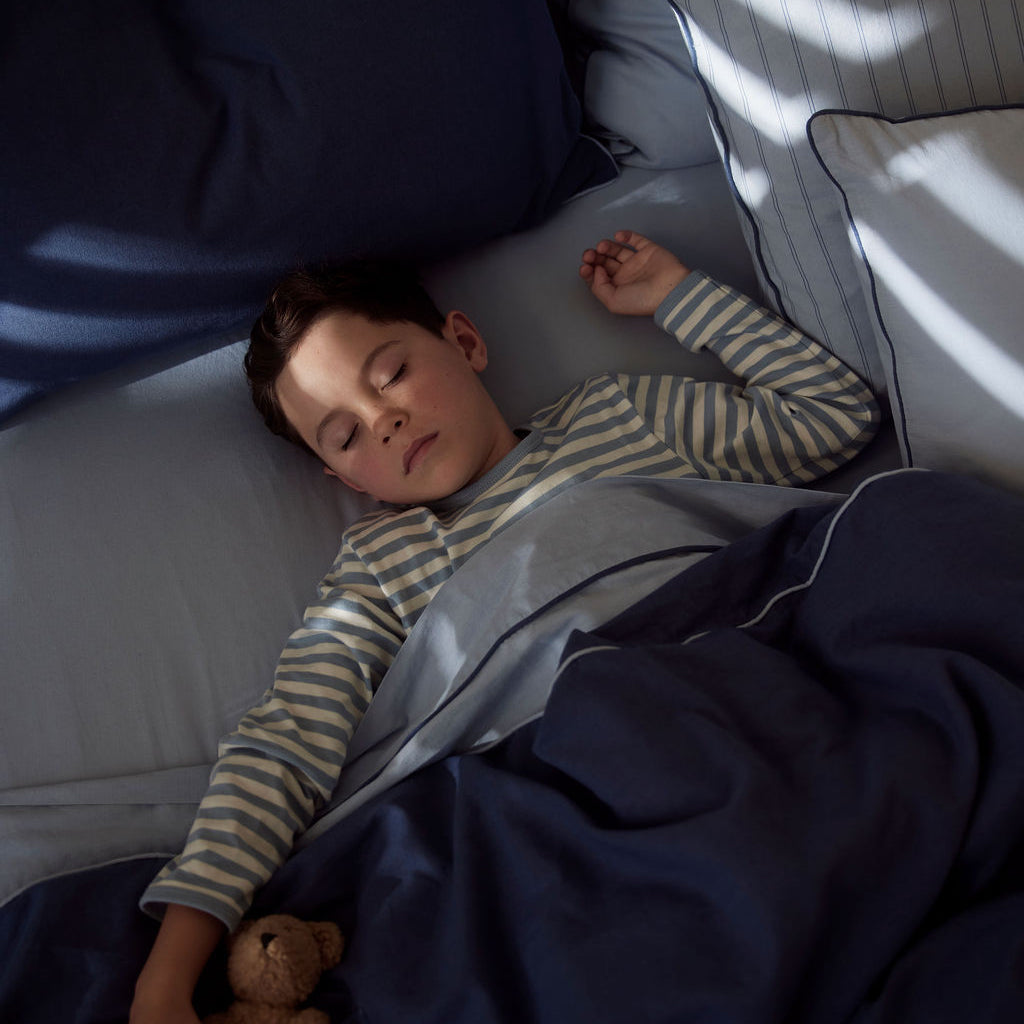
It's not just the room. It's the tiny climate underneath the covers.
When we fall asleep, our bodies begin making changes that help prepare us for sleep. One of those changes is the way we release heat.
Heat needs somewhere to go.
And when your child is sleeping, there's a small environment sitting directly around their body:
Skin → sleepwear → sheet → duvet → air
If those layers don't allow enough heat and moisture to move away from the body, that little environment can become warm and humid, even when the bedroom itself feels comfortable.
This is sometimes referred to as the sleep microclimate.
And it matters because comfort isn't determined by the temperature of the whole room alone.
It's also about what's happening right next to your child's skin.
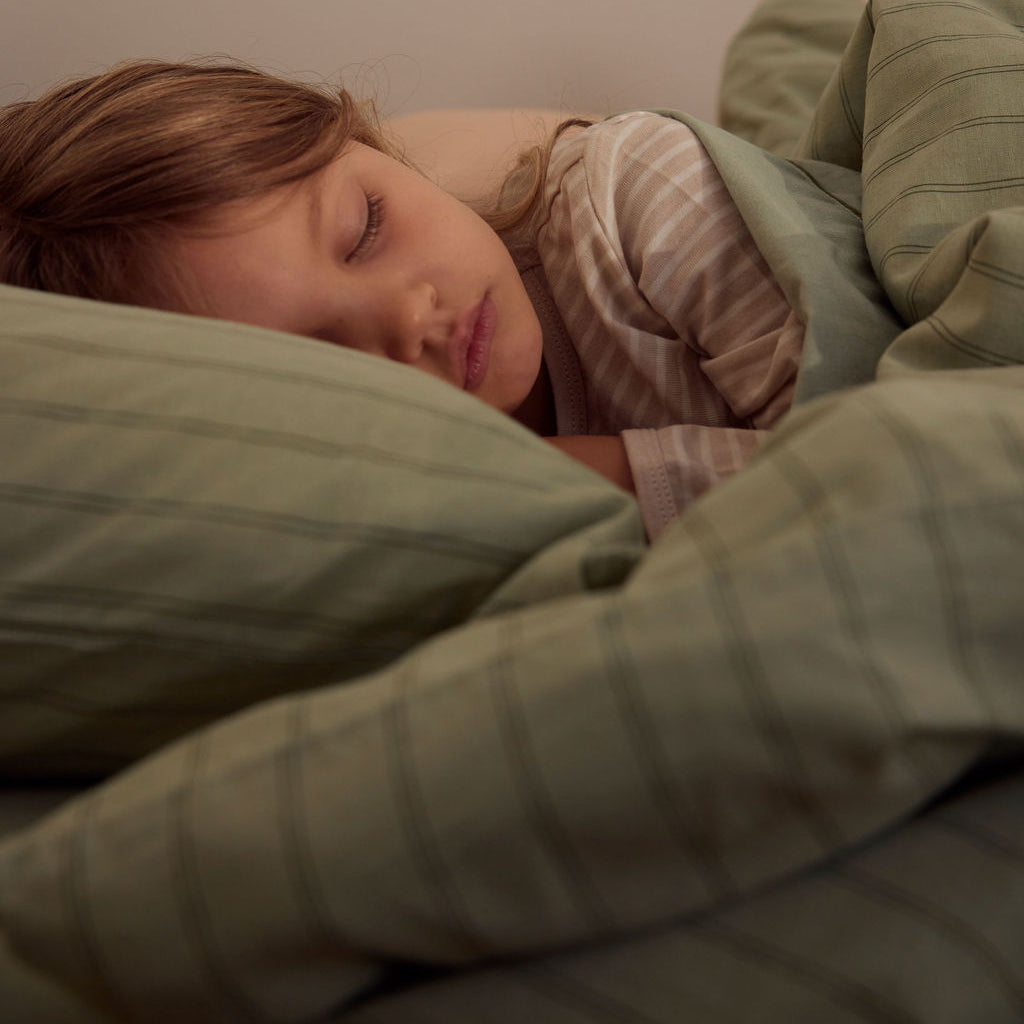
Children aren't just little adults.
A child's ability to regulate body temperature is still developing, particularly when they're young.
Their bodies also have a relatively large surface area compared with their size, which affects how they gain and lose heat.
So while you might feel perfectly comfortable under the duvet, your child can be feeling completely different.
That's why “the room is 20°C” doesn't necessarily tell you how your child feels.
Their body, sleepwear, bedding and the air around them all contribute to their experience.
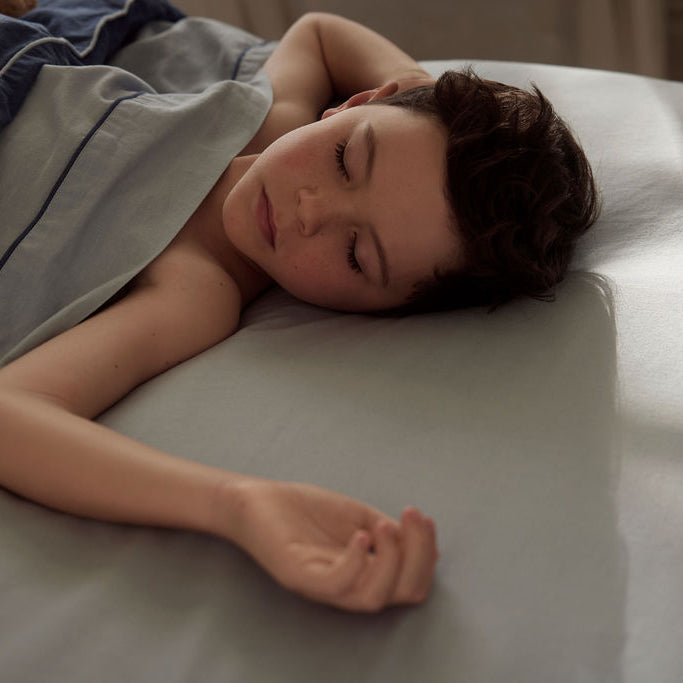
Look at your child's body, not just the thermometer.
If you're wondering whether your child is too warm, don't rely on their hands and feet alone. These can often feel cool even when their core is warm.
Instead, check areas like the back of their neck or upper chest.
If they're hot, sweaty or clammy, that's useful information.
And if you're consistently finding them overheated overnight, it may be worth looking at the layers closest to their body before assuming you need to make the entire bedroom colder.
If your child sleeps hot, you'll probably know about it.
Maybe they:
- Kick their covers off
- Wake with sweaty hair or body
- Toss and turn more when the weather warms up
- Refuse heavier pyjamas or blankets
- Sleep better with the window open
- Wake during the night feeling clammy
- Seem perfectly comfortable while you're wondering how they're not freezing
But here's the interesting part:
The temperature of the room is only one piece of the puzzle.
It's not just the room. It's the tiny climate underneath the covers.
When we fall asleep, our bodies begin making changes that help prepare us for sleep. One of those changes is the way we release heat.
Heat needs somewhere to go.
And when your child is sleeping, there's a small environment sitting directly around their body:
Skin → sleepwear → sheet → duvet → air
If those layers don't allow enough heat and moisture to move away from the body, that little environment can become warm and humid, even when the bedroom itself feels comfortable.
This is sometimes referred to as the sleep microclimate.
And it matters because comfort isn't determined by the temperature of the whole room alone.
It's also about what's happening right next to your child's skin.
Children aren't just little adults.
A child's ability to regulate body temperature is still developing, particularly when they're young.
Their bodies also have a relatively large surface area compared with their size, which affects how they gain and lose heat.
So while you might feel perfectly comfortable under the duvet, your child can be feeling completely different.
That's why “the room is 20°C” doesn't necessarily tell you how your child feels.
Their body, sleepwear, bedding and the air around them all contribute to their experience.
Look at your child's body, not just the thermometer.
If you're wondering whether your child is too warm, don't rely on their hands and feet alone. These can often feel cool even when their core is warm.
Instead, check areas like the back of their neck or upper chest.
If they're hot, sweaty or clammy, that's useful information.
And if you're consistently finding them overheated overnight, it may be worth looking at the layers closest to their body before assuming you need to make the entire bedroom colder.
Start with the layers closest to them.
You don't need to completely redesign your child's bedroom.
Small changes can make a difference.

01 — Choose breathable fabrics
Look for materials that allow air and moisture to move rather than trapping warmth against the skin = Natural fibres only.

02 — Keep sleepwear light
Your child's pyjamas and bedding work together. If both are heavy, warmth can build up quickly.
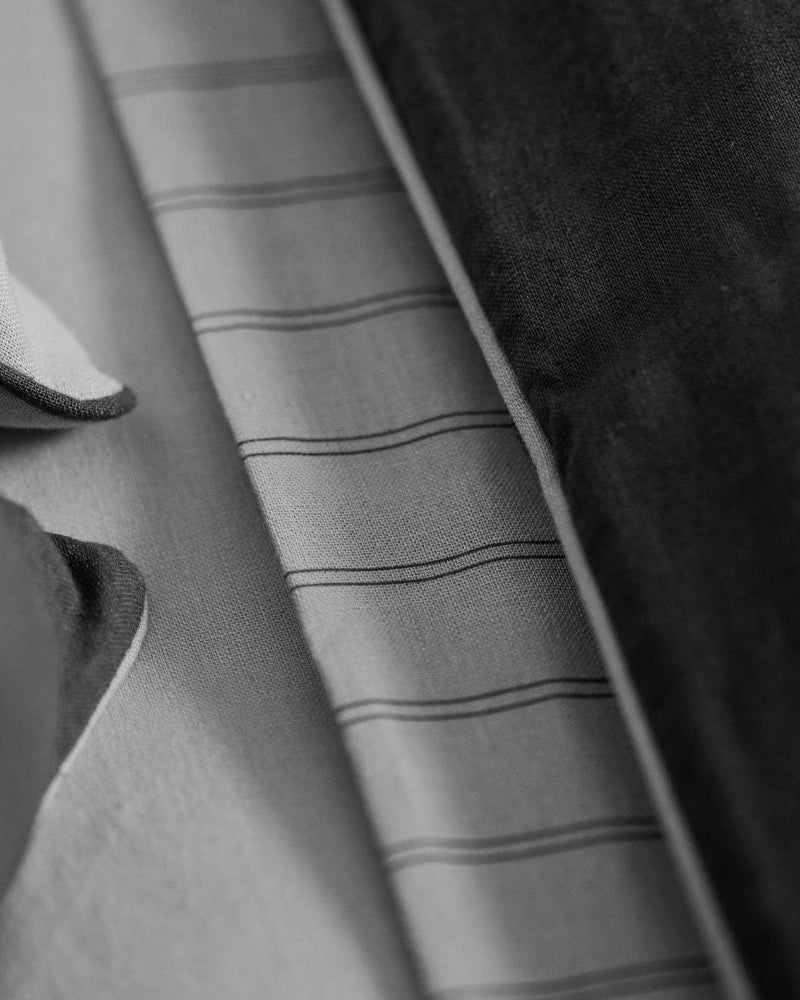
03 — Think in adjustable layers
Lighter, flexible layers make it easier to adjust to changing temperatures throughout the night and across the seasons.

04 — Keep the bedroom comfortable
Cool, well-ventilated air is important. There's no single “perfect” temperature but all research points to 18-20°C. Your child's cues matter too.

05 — Don't underestimate the sheet
The sheet is the layer directly against your child's skin for hours at a time. What it's made from more important than you might think.
The layer closest to the body deserves more thought.
We spend a lot of time thinking about mattresses, sleep temperature, blackout blinds and bedtime routines.But the fabric touching your child's skin can easily become an afterthought.
At Minó, we don't think it should be.
Your child spends more time touching their bedding than almost anything else in their bedroom.
So every part of it — from the fibre to the weave to the finish — should have a reason for being there.
That's what “Designed for rest” means to us.
For little sleepers who run warm
Start with the layers closest to the skin.
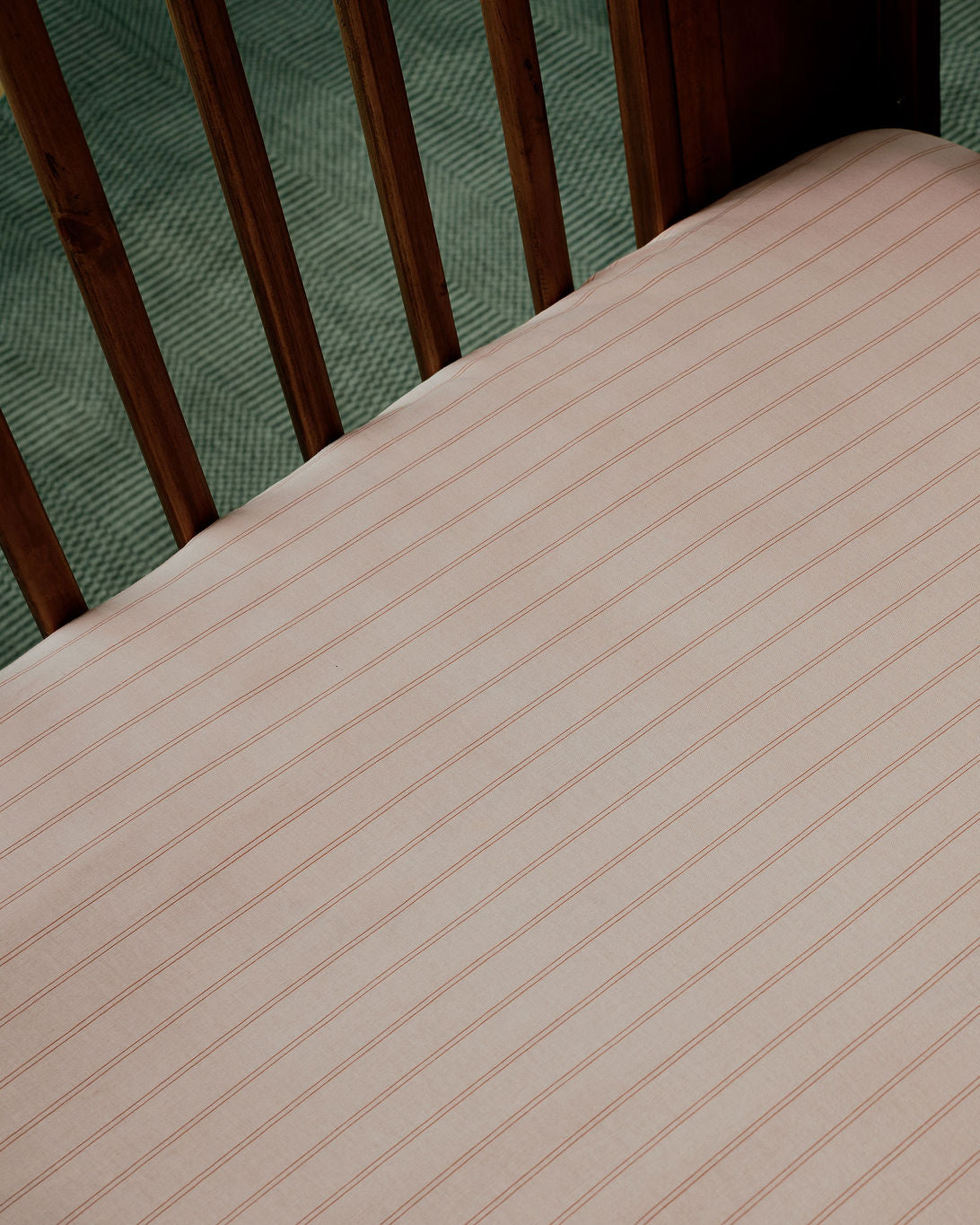
Our Rest Weave™ linen-cotton bedding is designed to create a breathable, comfortable foundation for sleep. With lightweight layers you can adapt as the temperature changes.


Try this tonight.
Before changing the thermostat, check your child's neck or upper chest about an hour after they've gone to sleep.
If their skin feels hot, sweaty or clammy, try reducing a layer rather than simply turning the room colder.
Then pay attention to what happens.
Sometimes the smallest change is the one closest to the skin.


