


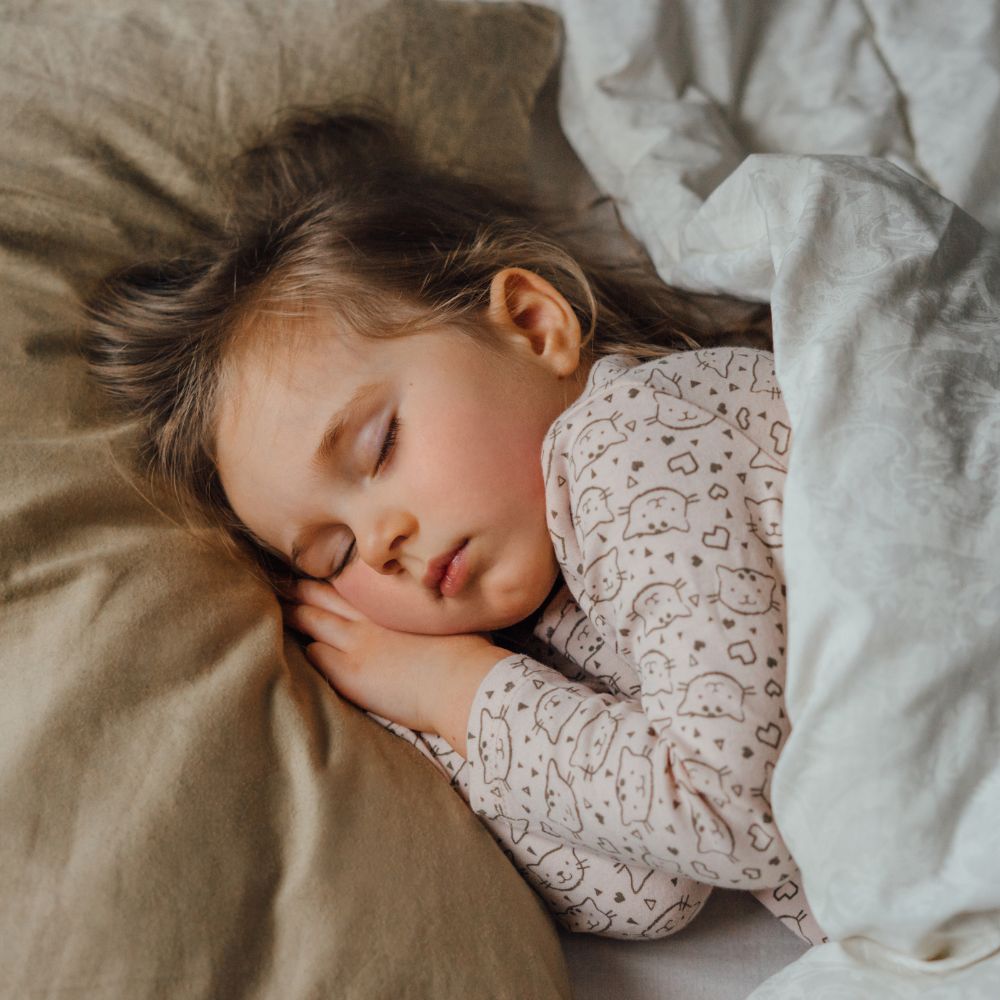
Parents perfect the ritual. The place their child actually sleeps is often an afterthought.
You've done everything by the book.
Bath time: check. Lavender scent: check. Soft music, bedtime story. Cuddles. The routine is perfect.
You tuck them in and tiptoe out. Tonight will be different.
Except...
You've done everything by the book.
Bath time: check. Lavender scent: check. Soft music, bedtime story. Cuddles. The routine is perfect.
You tuck them in and tiptoe out. Tonight will be different.
Except...
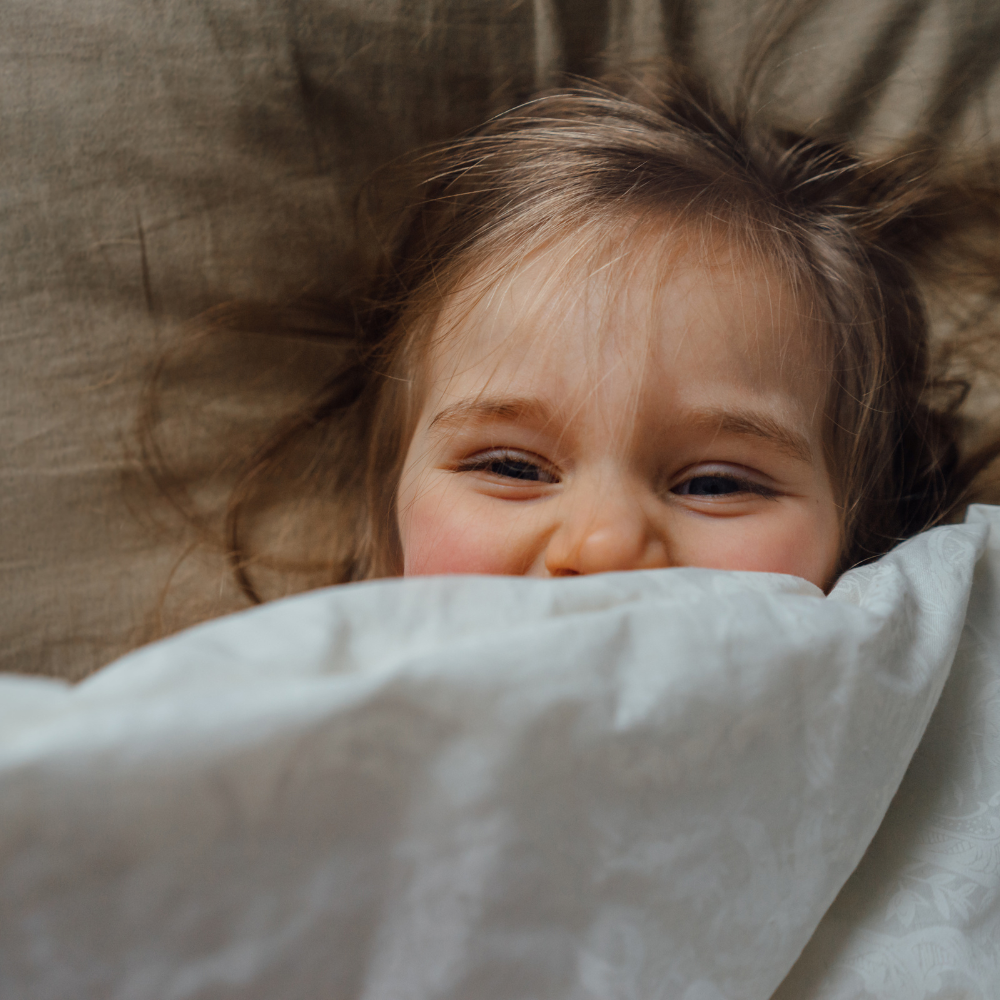
Bold colours and busy patterns actually increase heart rate and delay sleep onset. So much children's bedding is designed to entertain. Almost none of it is designed to help a child sleep.
Cool tones lower heart rate
Blue, green, and lavender lower heart rate and blood pressure, promoting physiological calm. Bright, saturated colors increase alertness and bedtime resistance.
de Lange et al, 2019; Journal of Environmental Psychology
Soft warm tones create emotional safety
Light pinks, peaches, and soft yellows increase feelings of cosiness and security without overstimulation.
Faber Birren; Color Psychology Research
Simple patterns promote visual calm
Simple, symmetrical patterns promote calm. Complex or high-contrast patterns overstimulate and keep the brain visually engaged.
National Sleep Foundation

THE MINÓ DIFFERENCE
Nature-inspired palettes
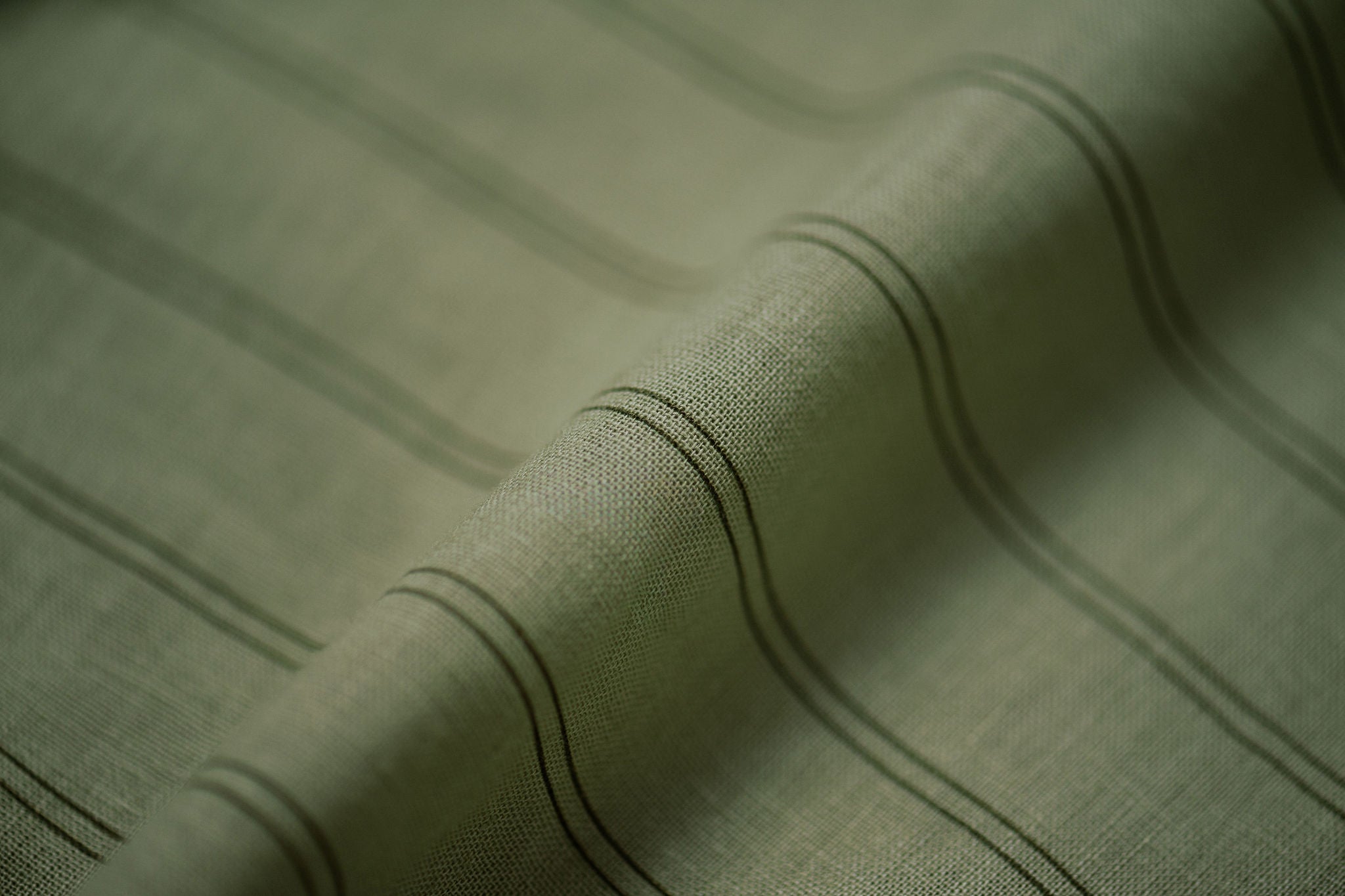
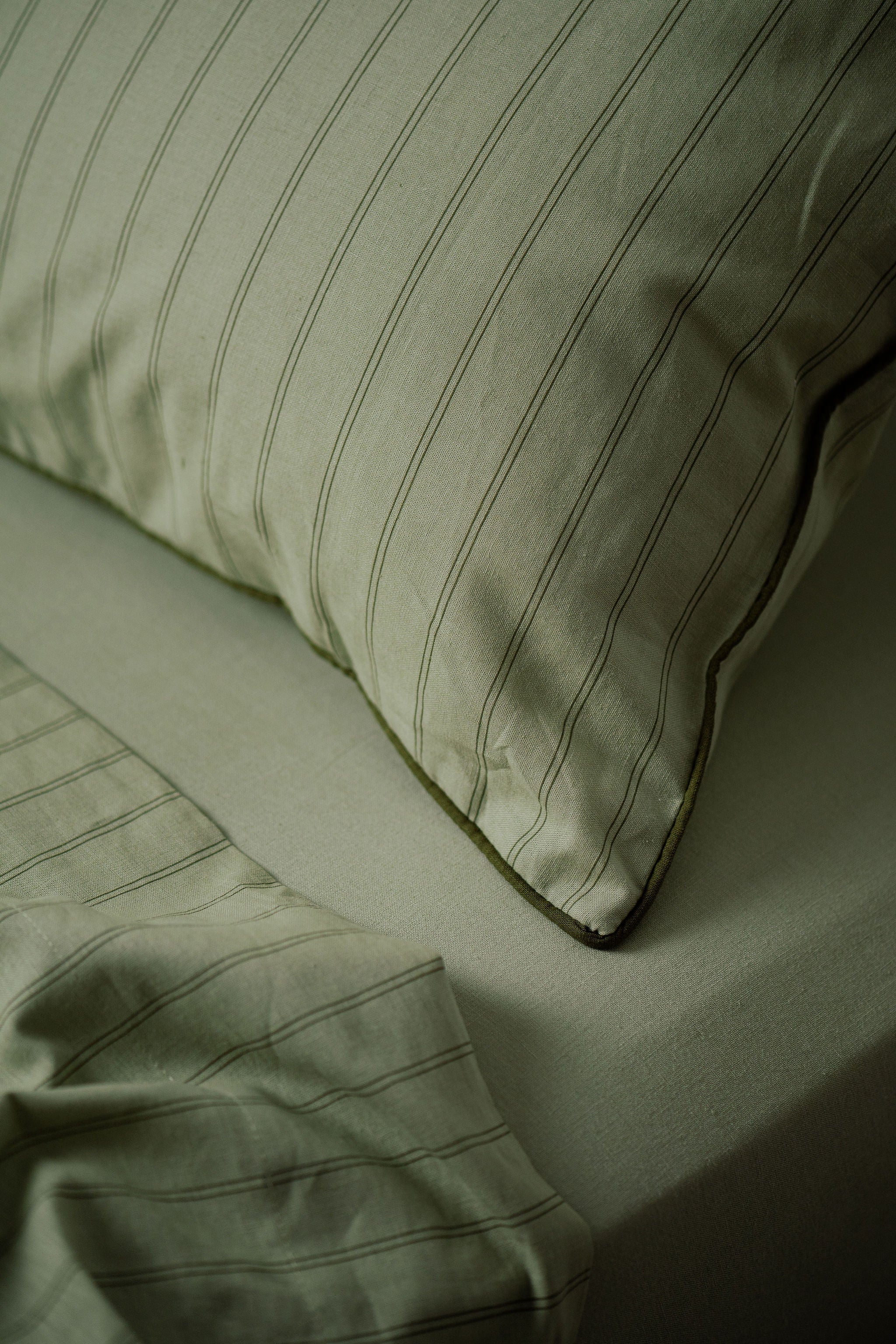
Calming, nature-inspired colours like pastel blues, sage greens, soft pinks. Muted tones and low-contrast designs that signal: it’s time to wind down. No cartoon chaos. No visual overstimulation.


But they're playing, not settling
You watch as they bounce on the bed, pointing at the characters on their duvet. "Look! Spider-Man is fighting the bad guy!" Full of energy.
The bedding is doing its job. Just not the one you need right now.
Bedtime isn't playtime.
But they're playing, not settling
You watch as they bounce on the bed, pointing at the characters on their duvet. "Look! Spider-Man is fighting the bad guy!" Full of energy.
The bedding is doing its job. Just not the one you need right now.
Bedtime isn't playtime.
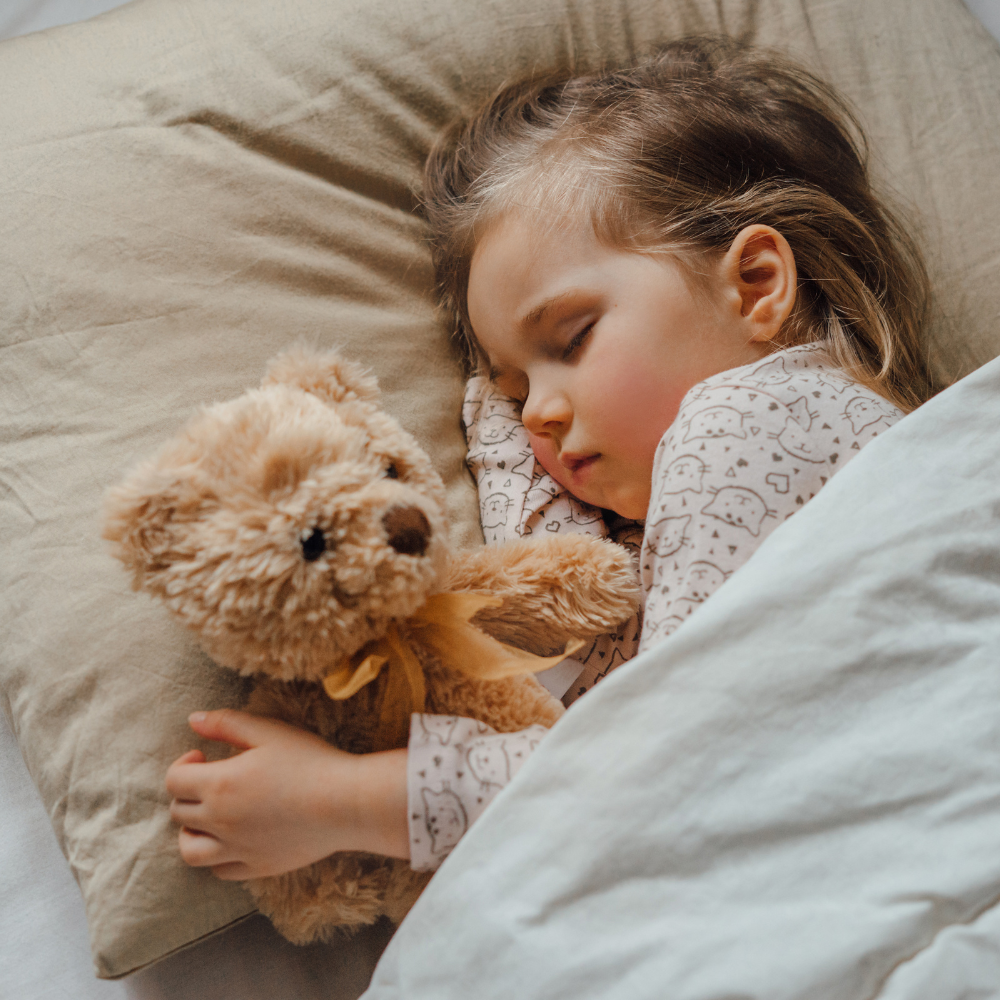
Fear, anxiety, separation. They all affect sleep. Children need environments that help them self-soothe, bridging the gap between awake and asleep.
Transitional objects aid self-soothing
Items linked to parental care reduce bedtime anxiety and improve independent sleep onset. Children sleep best when they feel emotionally safe and connected.
British Journal of Developmental Psychology; Cambridge University Press

THE MINÓ DIFFERENCE
Design elements that comfort
Subtle references to comfort and connection woven throughout. Thoughtful details that help children feel secure and held, even when they’re alone.
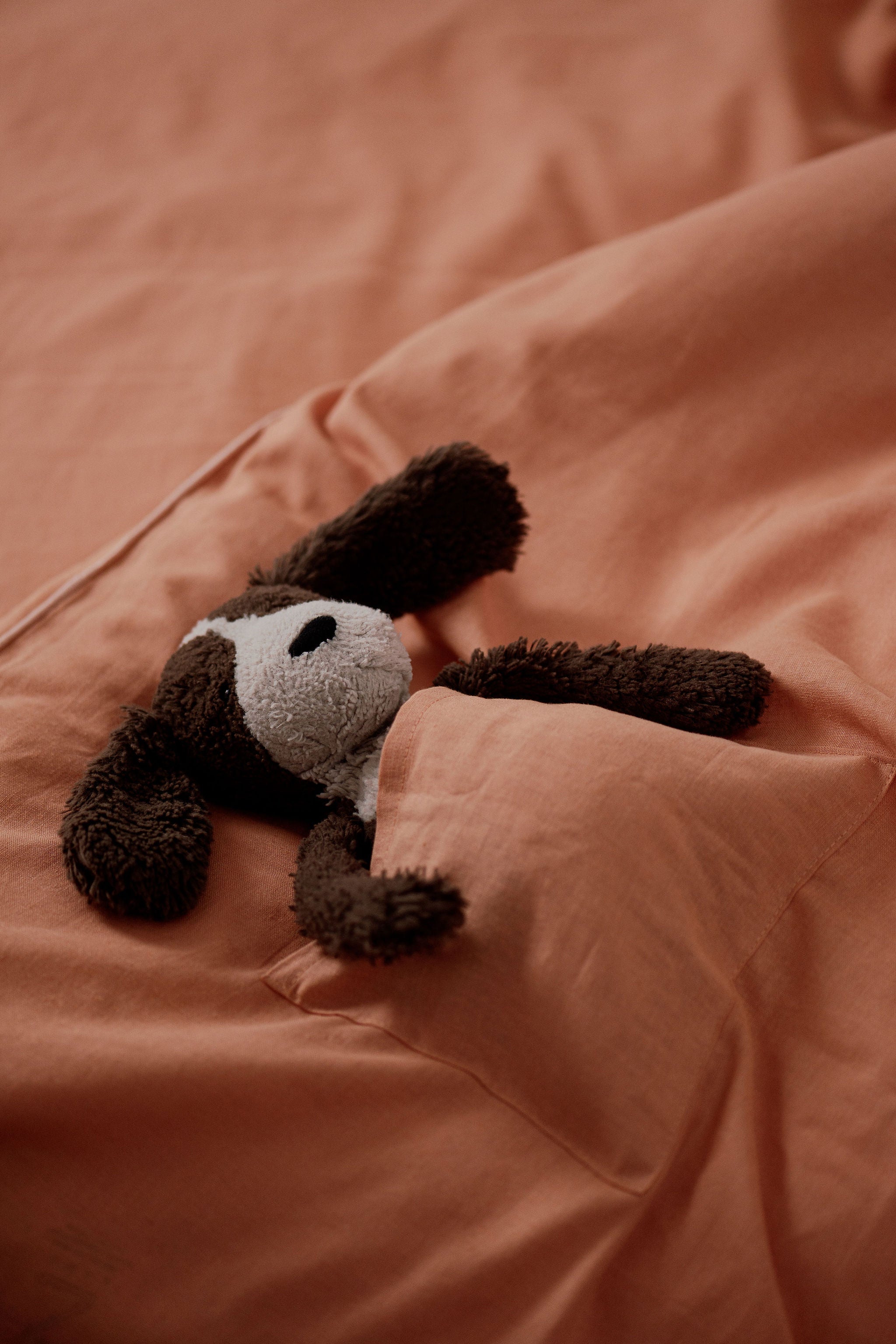

They need something to hold on to
Finally, they start to settle. But they’re clutching their stuffed animal tighter. “Can you leave the door open? Just a little?”
Bedtime is when they’re most vulnerable. Alone with their thoughts. The house quiet, the shadows longer.
They need something that says: you are safe, you are loved, you can rest.
They need something to hold on to
Finally, they start to settle. But they’re clutching their stuffed animal tighter. “Can you leave the door open? Just a little?”
Bedtime is when they’re most vulnerable. Alone with their thoughts. The house quiet, the shadows longer.
They need something that says: you are safe, you are loved, you can rest.
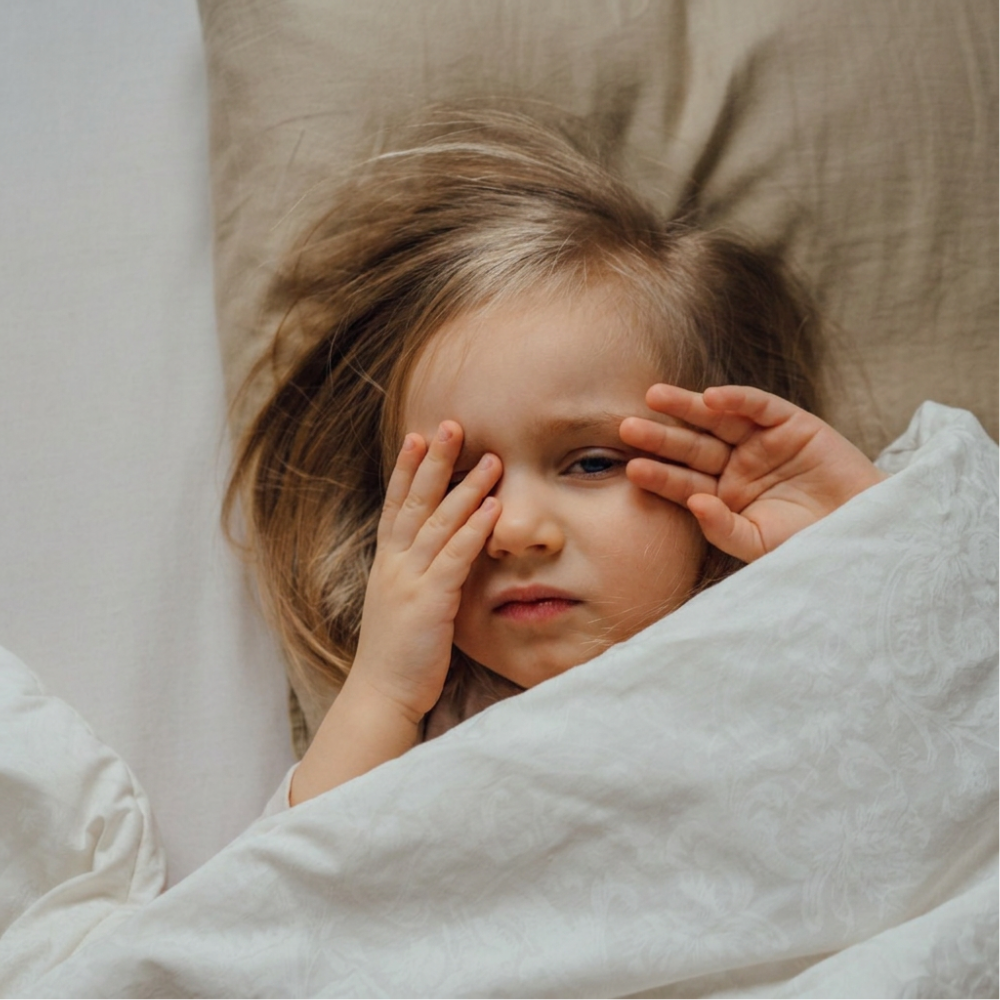
Even a little light can stop their brains from knowing it’s bedtime. Darkness signals melatonin. Ambient light disrupts that message entirely.
Light disrupts melatonin production
External light impacts sleep quality significantly. Circadian rhythms are highly sensitive to light exposure. Even small amounts can reduce melatonin production and delay sleep onset.
NINDS, 2020; American Academy of Sleep Medicine

THE MINÓ DIFFERENCE
Restorative darkness
Complete darkness helps children’s brains recognise it’s time to sleep. Our deep sleep mask blocks 100% of light, creating the optimal environment for natural melatonin production and deep rest.
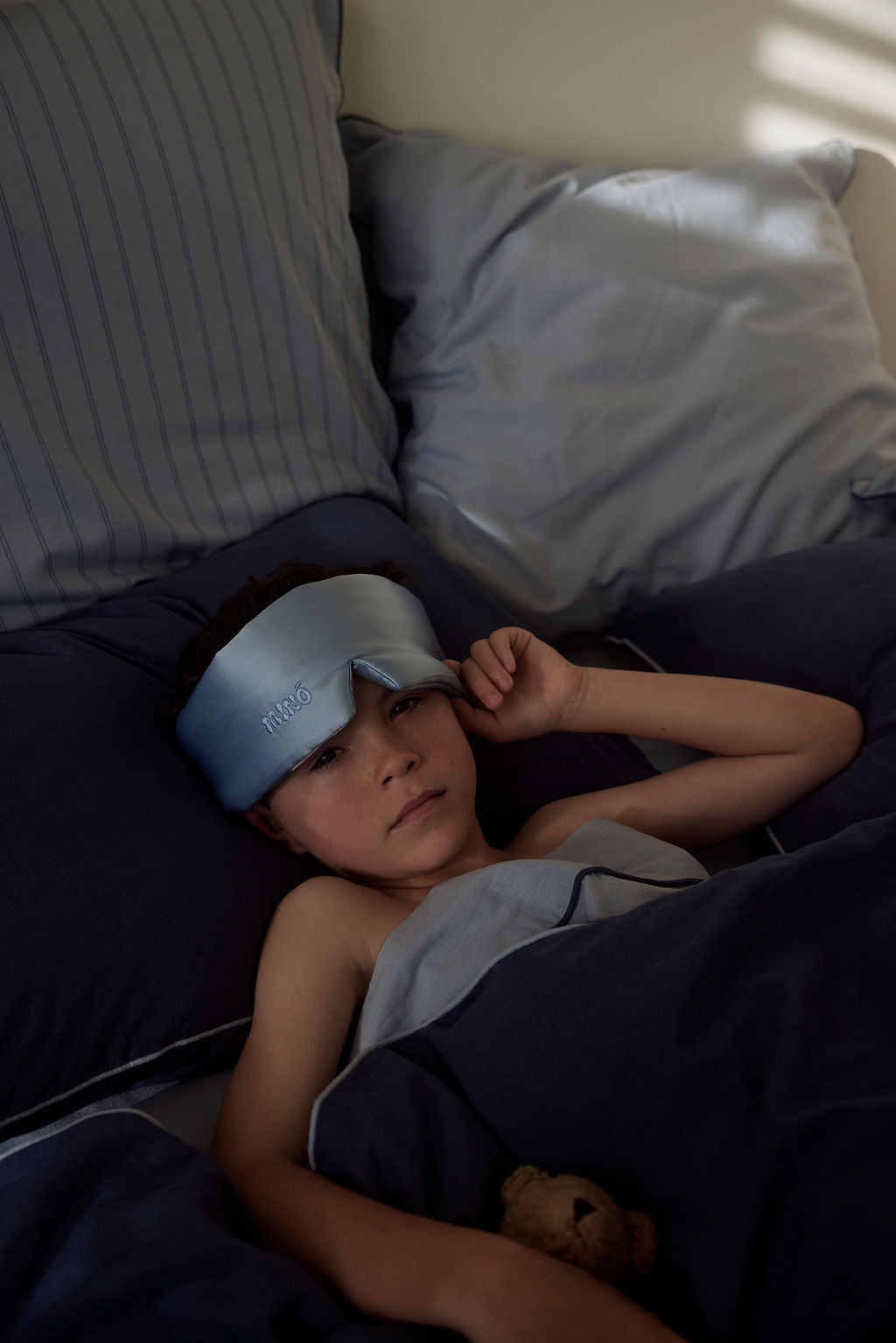

But even a little light keeps them awake
You've dimmed the lights and closed the curtains. But as you turn to leave, you notice: the streetlight outside still glows through the gap, casting shadows across the ceiling.
Their eyes track the movement. They shift. That thin strip of light is just enough to confuse their brain: is it morning?
But even a little light keeps them awake
You've dimmed the lights and closed the curtains. But as you turn to leave, you notice: the streetlight outside still glows through the gap, casting shadows across the ceiling.
Their eyes track the movement. They shift. That thin strip of light is just enough to confuse their brain: is it morning?
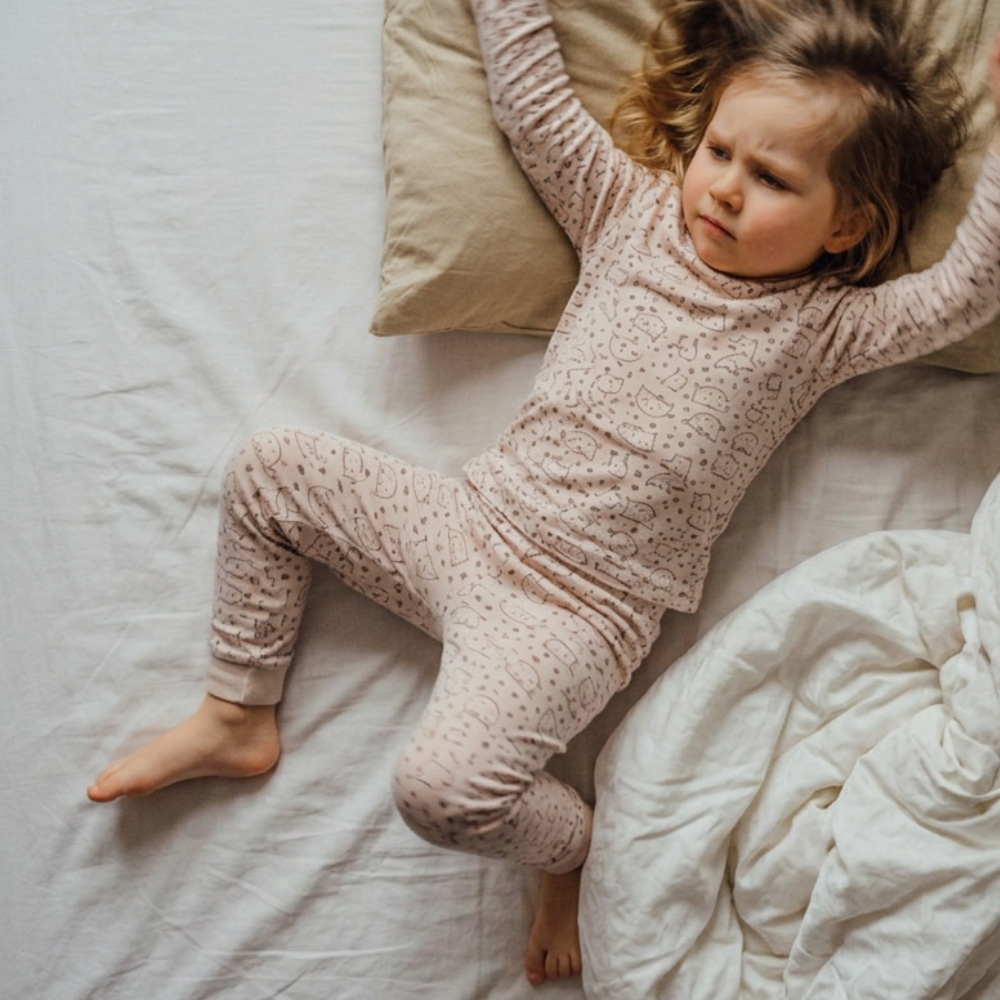
Even with the perfect routine, something is undoing all your hard work. The bath, the story, the cuddles: lost to bedding that works against rest.
They're still restless
An hour and a half later, you check on them. They should be deep asleep by now.
But they're not.
Covers kicked off. Pulled back on. Shifted again.
They're still restless
An hour and a half later, you check on them. They should be deep asleep by now.
But they're not.
Covers kicked off. Pulled back on. Shifted again.
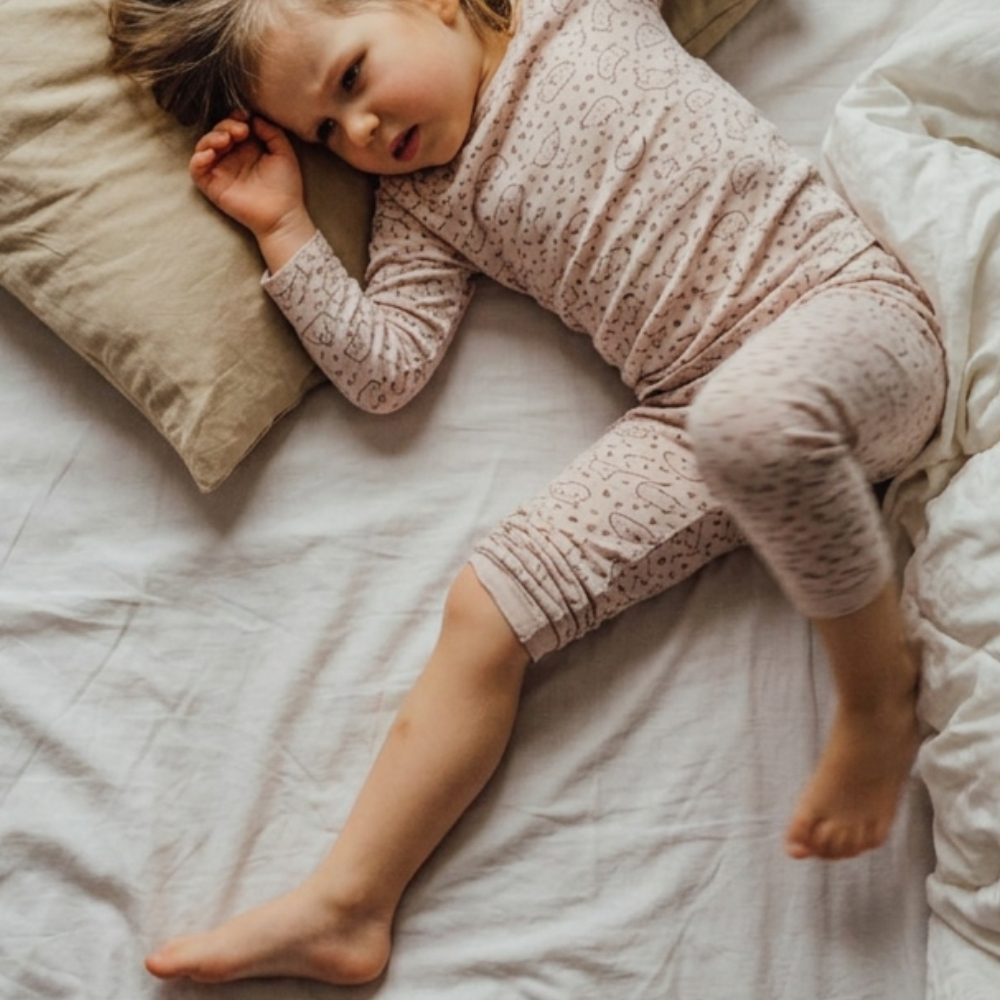
Temperature regulation is one of the top reasons children wake at night. When little bodies can’t stay cool enough, their sleep rhythm breaks.
Body temperature drives sleep quality
Regulating body temperature helps children fall asleep faster and stay asleep longer. Overheating is one of the primary causes of night waking.
Journal of Physiology, 2019
Children have different comfort ranges
School-aged children have different skin-temperature comfort ranges than adults. Most bedding is designed for grown-ups, not children’s physiology.
PubMed Research

THE MINÓ DIFFERENCE
Temperature-regulating fabrics
Our unique linen-cotton blend is breathable and moisture-wicking, designed specifically for children's thermal comfort. Light, adaptable layers that maintain the perfect microclimate throughout the night: no more night sweats, no more kicked-off covers.

They're too hot
The room temperature is fine. But when you touch their neck, it's sweaty. Covers kicked off, then pulled back. An endless cycle.
"It's not the room. It's fabric, trapping heat against their skin."
They're too hot
The room temperature is fine. But when you touch their neck, it's sweaty. Covers kicked off, then pulled back. An endless cycle.
"It's not the room. It's fabric, trapping heat against their skin."
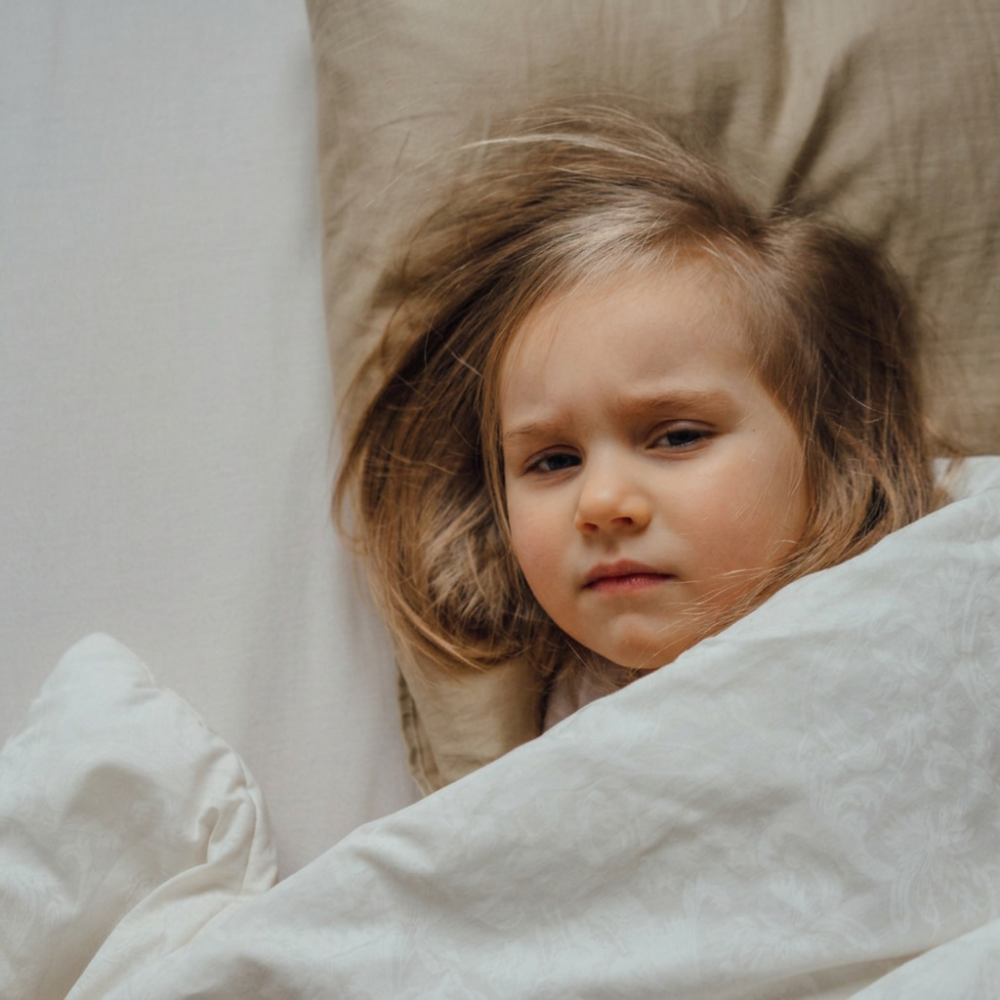
Scratchy textures, noisy fabrics, itchy tags: they all keep your child’s nervous system on high alert. Children don’t outgrow sensory needs; they grow into them.
Soft fabrics reduce nervous system arousal
Soft, breathable fabrics reduce irritation and promote uninterrupted sleep. Rough or noisy fabrics trigger alertness, scratching, and restlessness.
University of Leeds, 2019; National Sleep Foundation
Sensory sensitivity is real
Children with sensory sensitivities struggle to settle when textures feel “wrong.” Deep pressure and soft materials help trigger calm and melatonin production.
Sleep Foundation

THE MINÓ DIFFERENCE
Sensory-friendly design
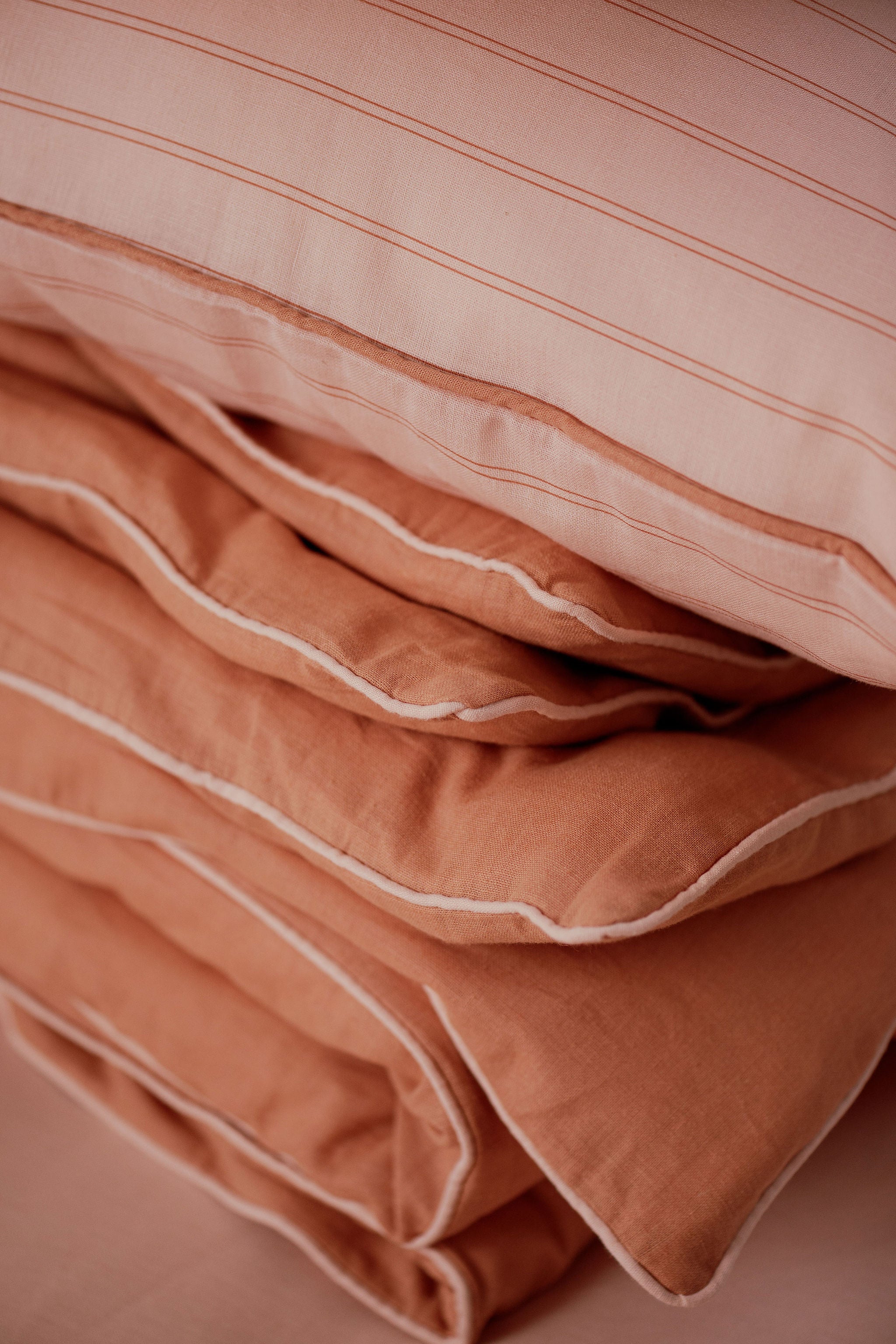
Tag-free, soft, silent fabrics that soothe rather than stimulate. Every seam is sensory-friendly. Every material choice is designed to calm the nervous system, not activate it.
SENSORY COMFORT
Sensory-Friendly Range
Ultra-soft, tag-free, seam-free bedding

Every touch keeps them alert
You notice the tag scratching their arm. The duvet makes a rustling sound.
The fabric feels stiff against their cheek. Not painful. Just wrong. Enough to keep their nervous system switched on when it should be winding down.
Every touch keeps them alert
You notice the tag scratching their arm. The duvet makes a rustling sound.
The fabric feels stiff against their cheek. Not painful. Just wrong. Enough to keep their nervous system switched on when it should be winding down.
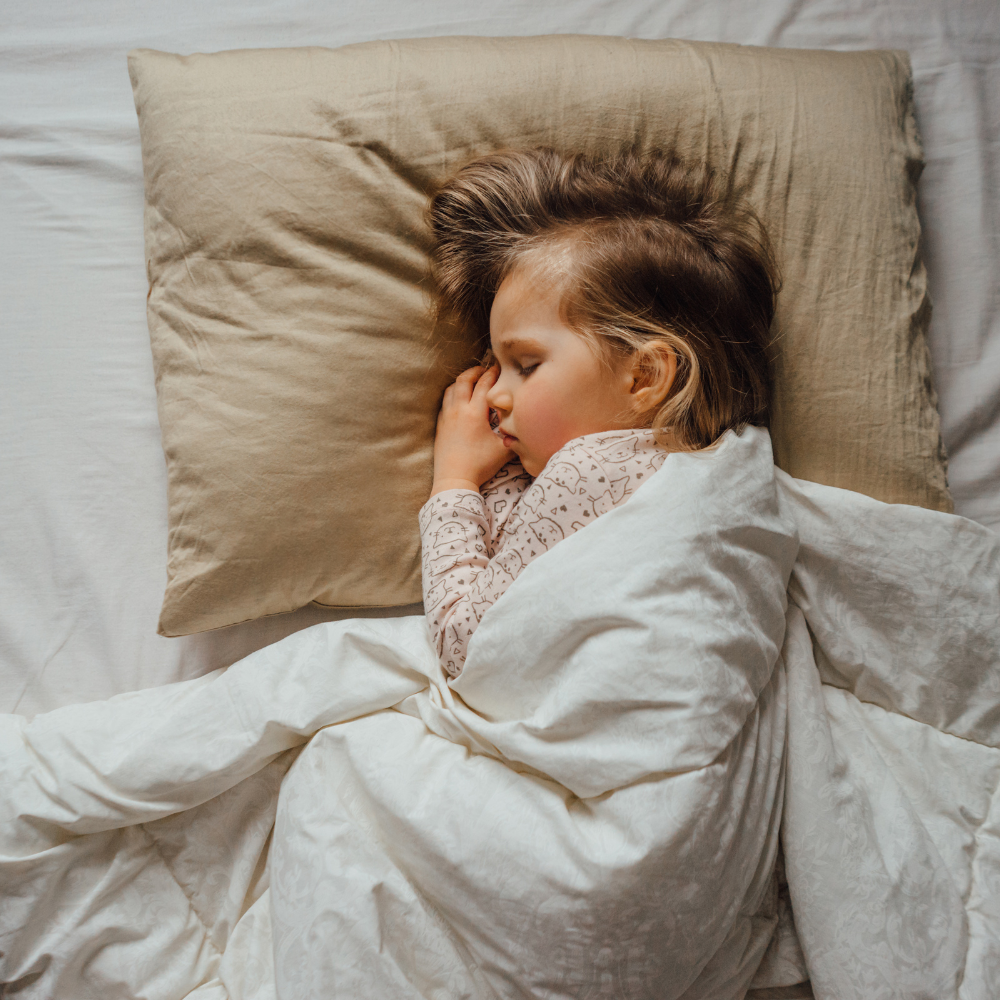
A well-rested child is a happier child: better mood, memory, emotional regulation. It all starts here, in a bed designed around their body, their senses, their needs, not just their room.
Sleep is when children grow
Growth hormones, memory consolidation, and emotional regulation all depend on deep rest. Sleep influences everything: mood, learning, physical development.
de Lange et al, 2019; Journal of Environmental Psychology

THE MINÓ DIFFERENCE
Designed for deep rest
When colour, safety, science, and comfort all work together, sleep becomes what it was always meant to be: restorative, deep, and healing.

Deep Sleep. Finally.
You peek in one last time. Their breathing is steady. The covers aren't kicked off. No rustling. No restlessness.
They're not just asleep. They're resting.
This is when the magic happens. Growth hormones release. Memories consolidate. Emotions regulate.
The room is dark. The fabric is soft. The temperature is just right. This is what bedtime was always meant to be.
Deep Sleep. Finally.
You peek in one last time. Their breathing is steady. The covers aren't kicked off. No rustling. No restlessness.
They're not just asleep. They're resting.
This is when the magic happens. Growth hormones release. Memories consolidate. Emotions regulate.
The room is dark. The fabric is soft. The temperature is just right. This is what bedtime was always meant to be.
Better sleep doesn't happen by accident.
It needs to be designed for rest.
Sleep Science
Temperature regulation, breathable fabrics, and light-responsive design based on children's physiology.
Sensory Wellbeing
Soft, silent, tag-free materials that soothe the nervous system rather than stimulate it.
Colour Psychology
Nature-inspired palettes scientifically proven to lower heart rate and promote calm.
Emotional Balance
Thoughtful details that build security, comfort and help children self-soothe.
Introducing
The Minó Method®
Most children's bedding is designed to please the eye, not to help a child's body and senses settle. We asked a different question: what if bedding were designed around how children actually fall asleep?
Find the missing piece
No one ever told you bedding mattered this much.
Better sleep doesn't happen by accident. It needs to be designed.


