


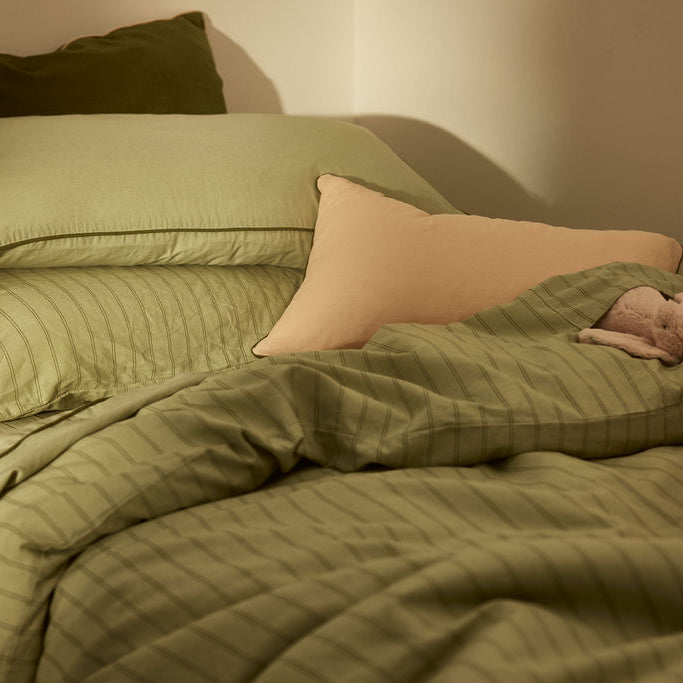
Does their bedroom feel calm — or just look good?
Maybe:
- Light comes through the curtains early in the morning
- The room gets hot overnight
- There's constant noise from outside
- The air feels stuffy
- Their bedding is scratchy or uncomfortable
- The room is visually busy
- Bedtime seems to happen in the same room where they play and wind themselves up
None of these things automatically mean your child will sleep badly.
But they're all part of the environment their body experiences during sleep.

The brain doesn't switch off from its surroundings.
Even while we're asleep, our brains continue monitoring the environment.
Light. Sound. Temperature. Air.
Some signals can influence sleep directly. Others simply make it harder to stay comfortable.
And the brain also learns associations.
When a space is consistently quiet, comfortable and associated with winding down, it can become part of the transition towards sleep.
The bedroom doesn't just contain sleep. It can help cue it.
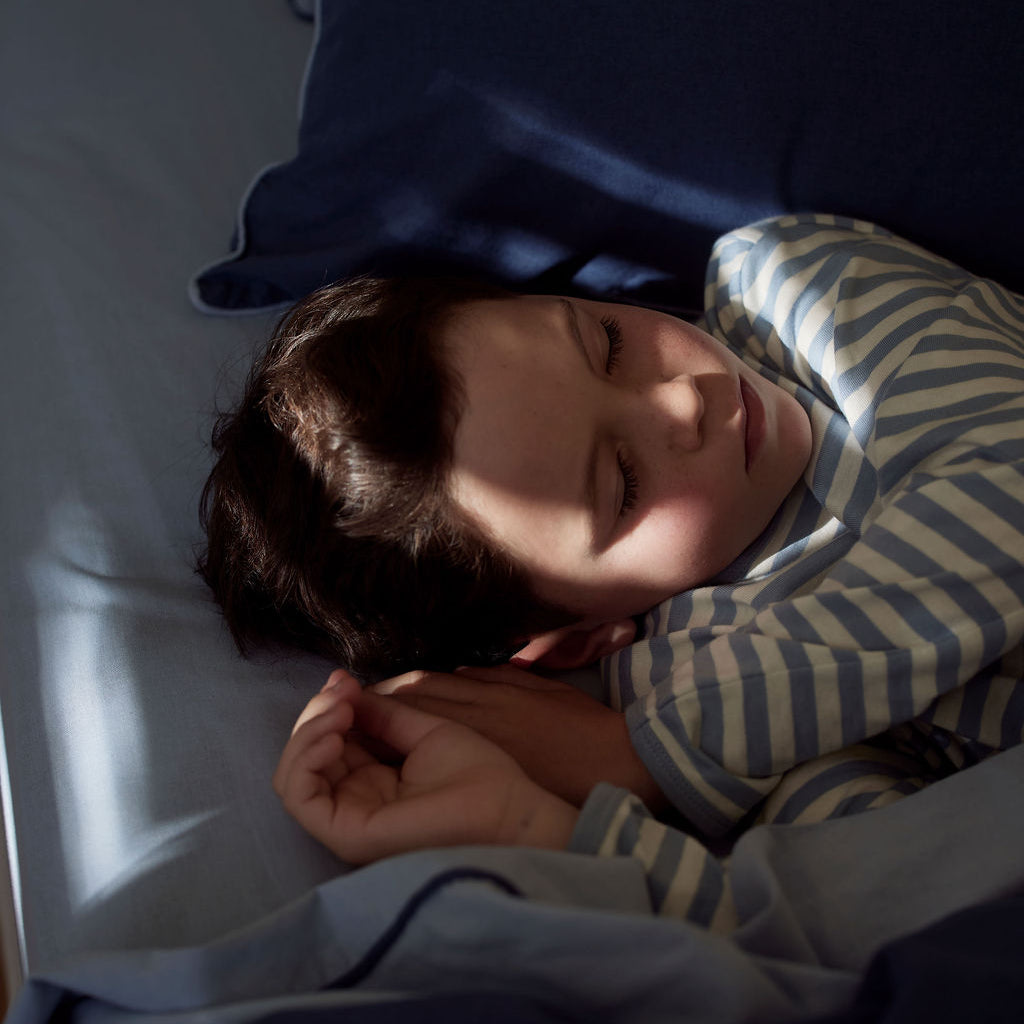
You don't need a perfect bedroom.
In fact, trying to optimise everything at once can make creating a calmer space feel overwhelming.
Instead, look for the thing most likely to be getting in your child's way.
Too hot? Start with temperature.
Too bright? Look at light.
Too noisy? Look at sound.
Uncomfortable? Look at the bed.
Visually busy? Simplify.
A calmer bedroom isn't about buying more.
It's about being more intentional.
Does their bedroom feel calm — or just look good?
Maybe:
- Light comes through the curtains early in the morning
- The room gets hot overnight
- There's constant noise from outside
- The air feels stuffy
- Their bedding is scratchy or uncomfortable
- The room is visually busy
- Bedtime seems to happen in the same room where they play and wind themselves up
None of these things automatically mean your child will sleep badly.
But they're all part of the environment their body experiences during sleep.
The brain doesn't switch off from its surroundings.
Even while we're asleep, our brains continue monitoring the environment.
Light. Sound. Temperature. Air.
Some signals can influence sleep directly. Others simply make it harder to stay comfortable.
And the brain also learns associations.
When a space is consistently quiet, comfortable and associated with winding down, it can become part of the transition towards sleep.
The bedroom doesn't just contain sleep. It can help cue it.
You don't need a perfect bedroom.
In fact, trying to optimise everything at once can make creating a calmer space feel overwhelming.
Instead, look for the thing most likely to be getting in your child's way.
Too hot? Start with temperature.
Too bright? Look at light.
Too noisy? Look at sound.
Uncomfortable? Look at the bed.
Visually busy? Simplify.
A calmer bedroom isn't about buying more.
It's about being more intentional.
Start with what you can actually change.
You don't need to completely redesign your child's bedroom.
Small changes can make a difference.

01 — Make the room comfortable
Think temperature, airflow and layers.

02 — Control unnecessary light
Especially around bedtime and early morning.

03 — Reduce disruptive noise
Where possible, minimise sudden or unpredictable sounds.
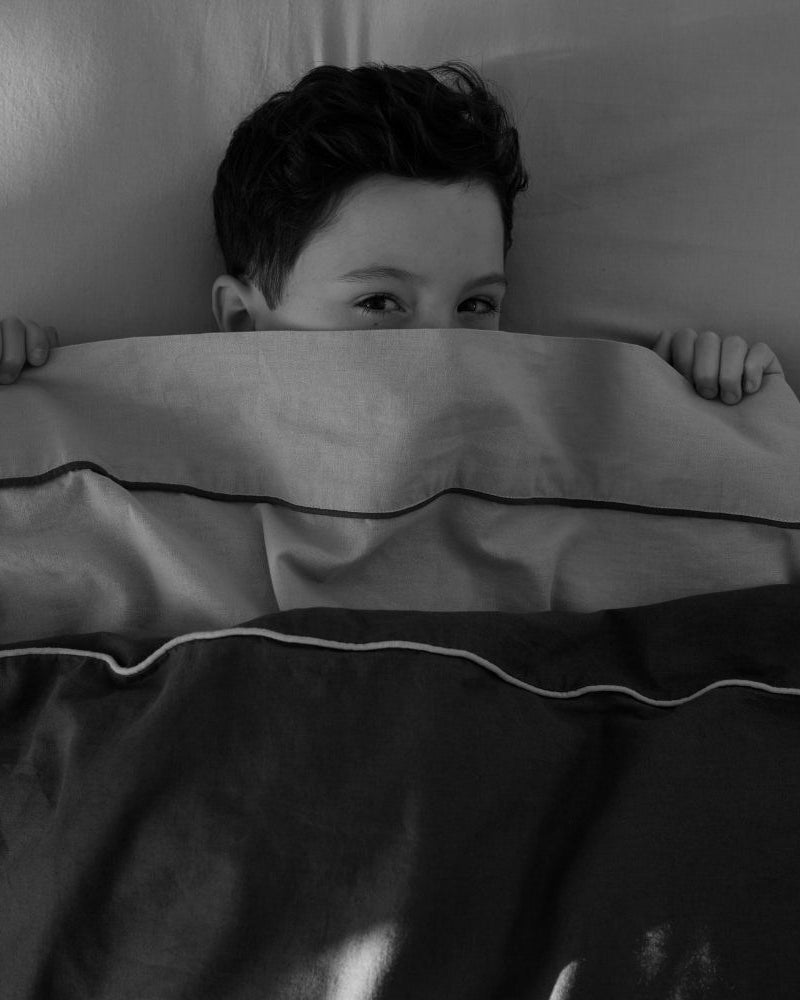
04 — Limit stimulation within reach
Toys, screens and bright, high-contrast colours near the bed can keep a developing brain alert when it should be winding down.

05 — Think carefully about the bed
The materials and textures surrounding your child's body matter more than most people realise.
We design the bedroom from the sleep outwards.
Most children's bedding starts with:
“What will look beautiful in the room?”
We started with:
“What does a child actually experience when they're lying here?”
That's why Minó considers colour, sensory experience, materials, temperature and emotional cues alongside how the finished room looks.
Because a child's bedroom shouldn't just look like a place to sleep. It should feel like one.

Do a two-minute bedroom audit tonight.
Spend two minutes in their room the way they experience it.
Stand where the bed is. Look, listen and feel what they would, after they've gone to sleep.
We created a scorecard explaining exactly what to check and why it matters.
Once you know what's working against sleep, you know what to fix.


