



Every colour in the Minó range was chosen for what it does to a child's nervous system, not how it looks on a mood board. Certain tones lower heart rate, reduce visual arousal, and help the brain accept that it is time to rest. Others do the opposite.
Three colour families. Each one addressing a different dimension of how children experience bedtime. Find the one that fits your child — or understand why the one you already love is working.
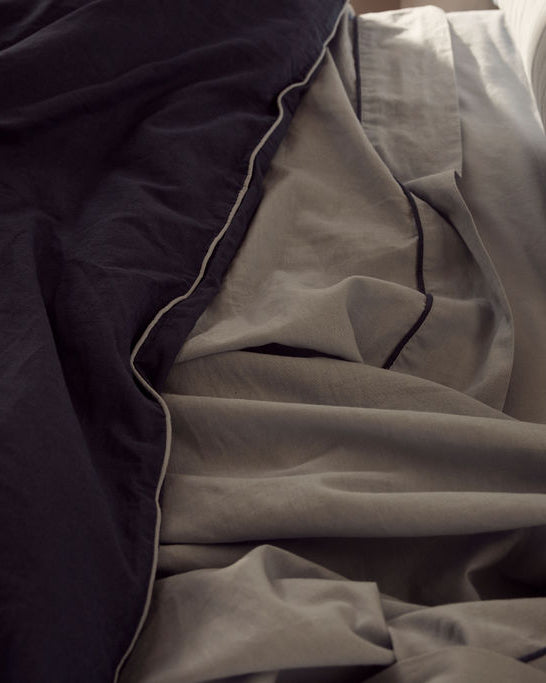
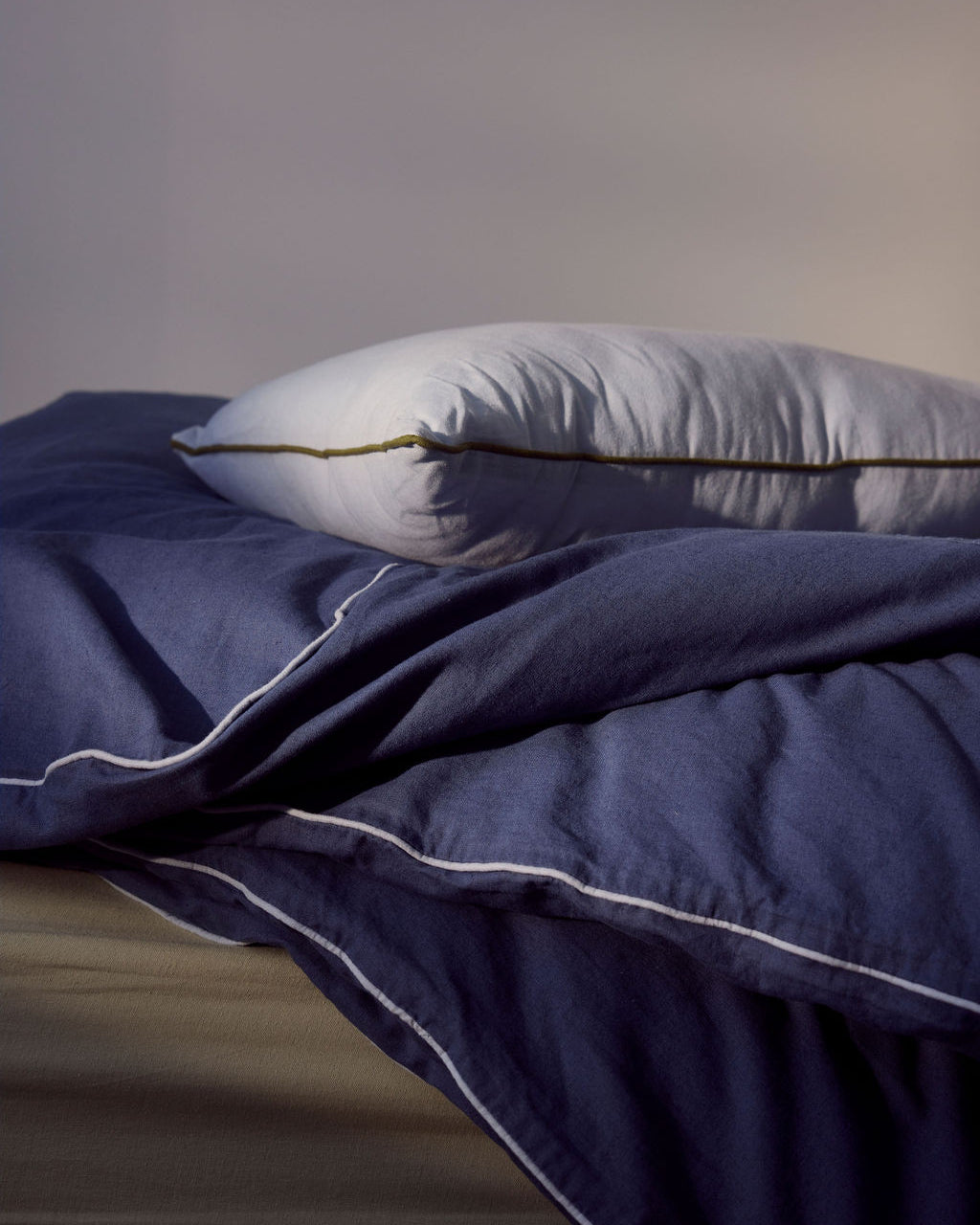
Soothing Blues
For children who can’t switch off, blues dim the chaos.
Blue is the most researched colour in sleep science and the most consistent performer. It lowers heart rate and blood pressure, reduces activity in the brain's alerting system, and is the only colour shown to actively promote melatonin production.
For children with busy minds — who lie awake replaying the day, who need one more question answered before lights out — the nervous system reads blue as permission to stop.
Blue tones reduce activity in the reticular activating system, the brain's wakefulness centre. Research links blue environments to lower cortisol and faster sleep onset in children.
- Midnight - A deep, grounding blue for the child whose mind keeps moving after lights out.
- Cloud - A soft, pale blue for the child who needs calm without heaviness.
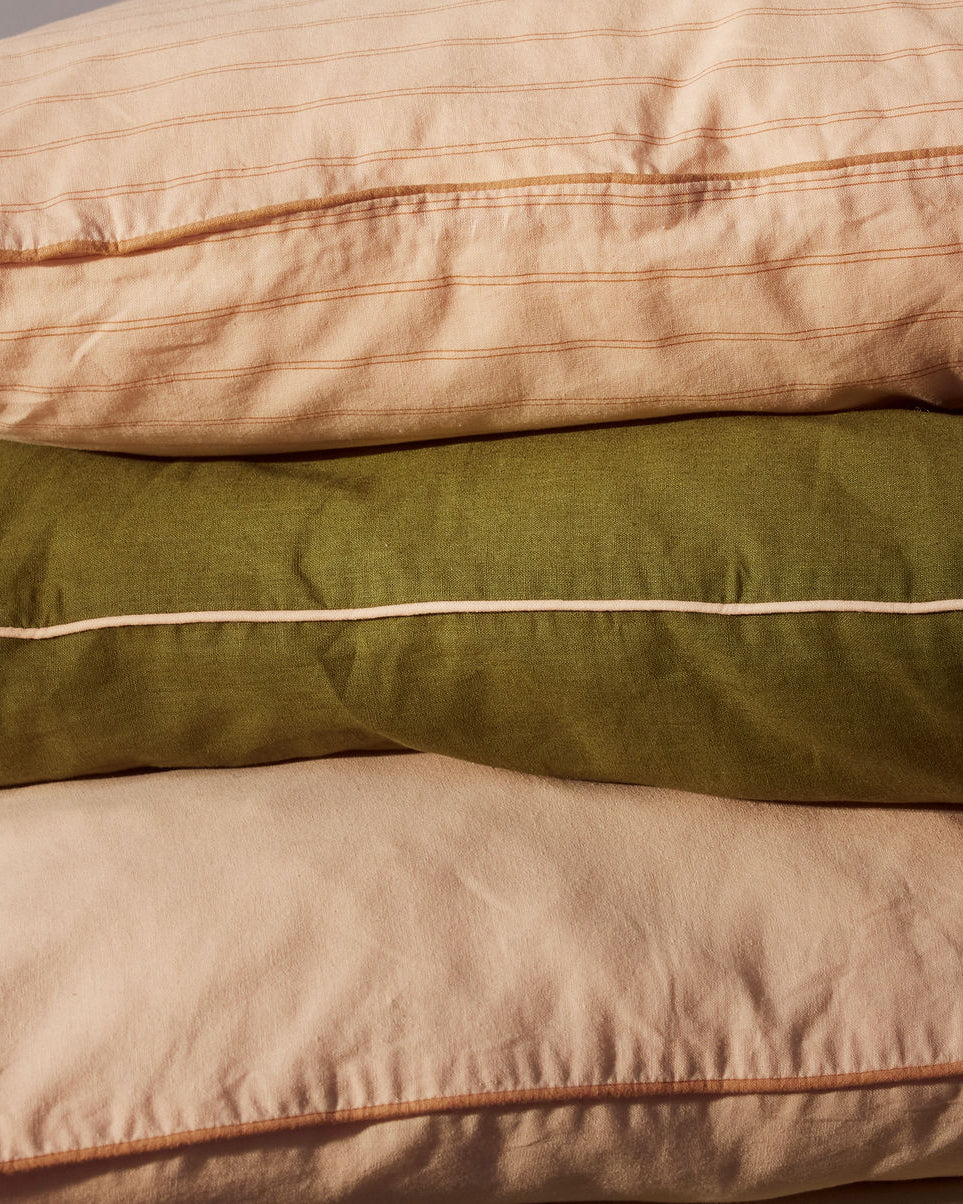
Natural Greens
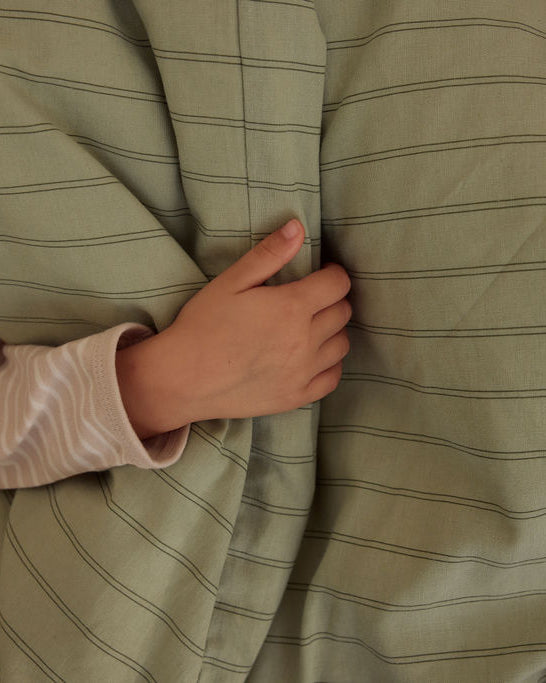
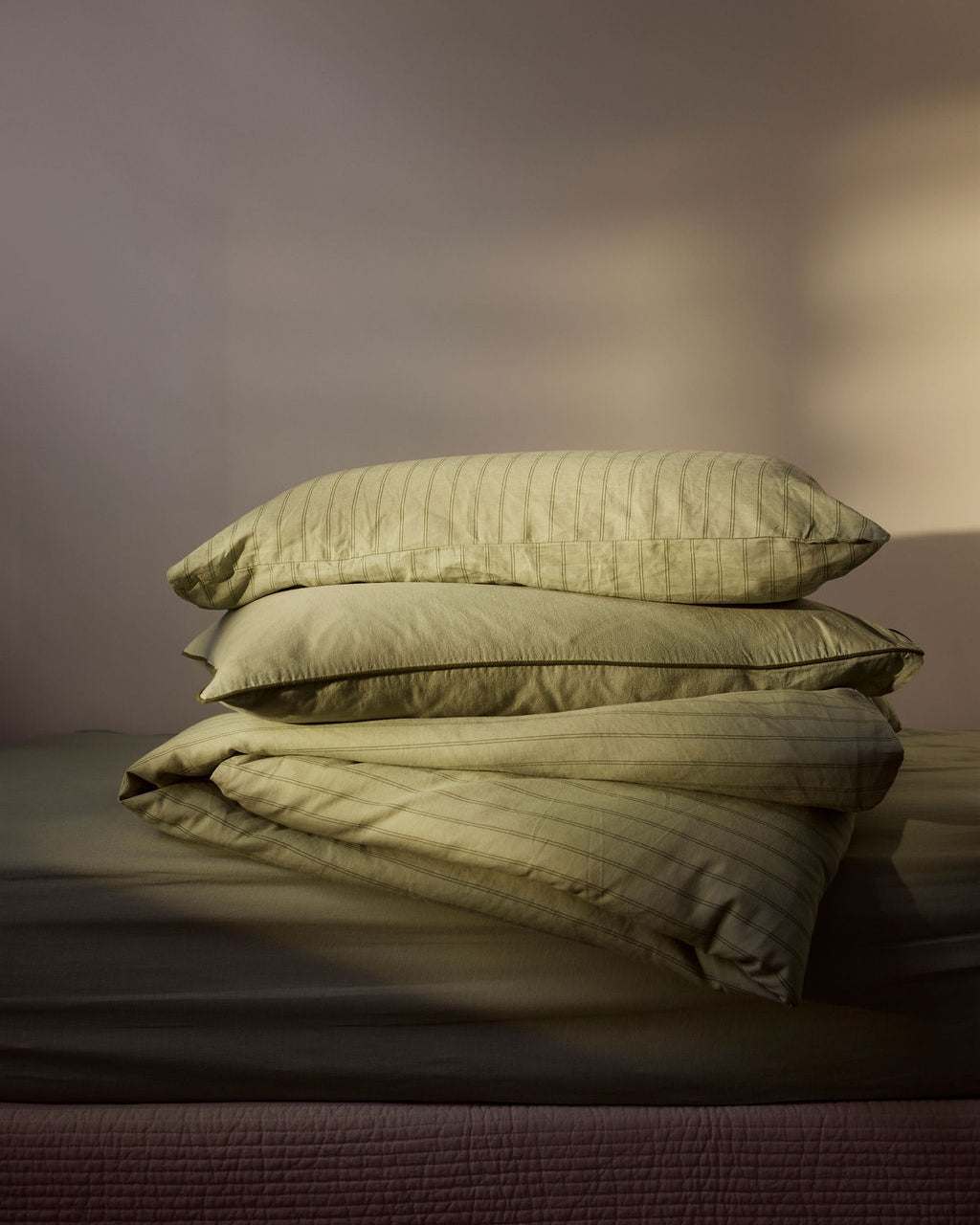
For children who hold on, greens tell the body it’s safe to let go.
Green is the most restful colour for the human eye. Evolutionary biology offers a reason: green signals nature, safety, and the absence of threat. Over thousands of years the nervous system has learned to associate it with being somewhere safe enough to rest.
It also has the lowest visual arousal profile of any colour in the spectrum. The eye does not have to work to process it.
Green tones activate the parasympathetic nervous system — the body's rest response. Research links green environments to reduced perceived threat and faster emotional recovery at bedtime.
- Forest - A deep, anchoring green for the child who needs to feel held rather than exposed.
- Sage - A soft, dusty green. Neither cool nor warm. For the child who needs calm without weight.
Cosy Pinks
For children with big feelings, pinks pull them close.
Soft, muted pinks work differently from blues and greens. Where blue and green lower arousal physiologically, pink works on the emotional side of sleep. Warmth. Security. The sense of being held.
For children who carry big feelings into bedtime — who find the transition into sleep emotionally hard — the environment itself can do some of the settling. Research consistently links soft warm tones with reduced separation anxiety and greater feelings of safety at bedtime.
Muted warm tones activate the brain's affiliative system, the neural network associated with connection and safety. For children whose primary barrier to sleep is emotional, this is the most relevant colour family.
- Terra - A warm, earthy pink for the child who needs grounding more than soothing.
- Blush - Pale, soft, and quietly warm. For the child who needs the room to meet them gently.
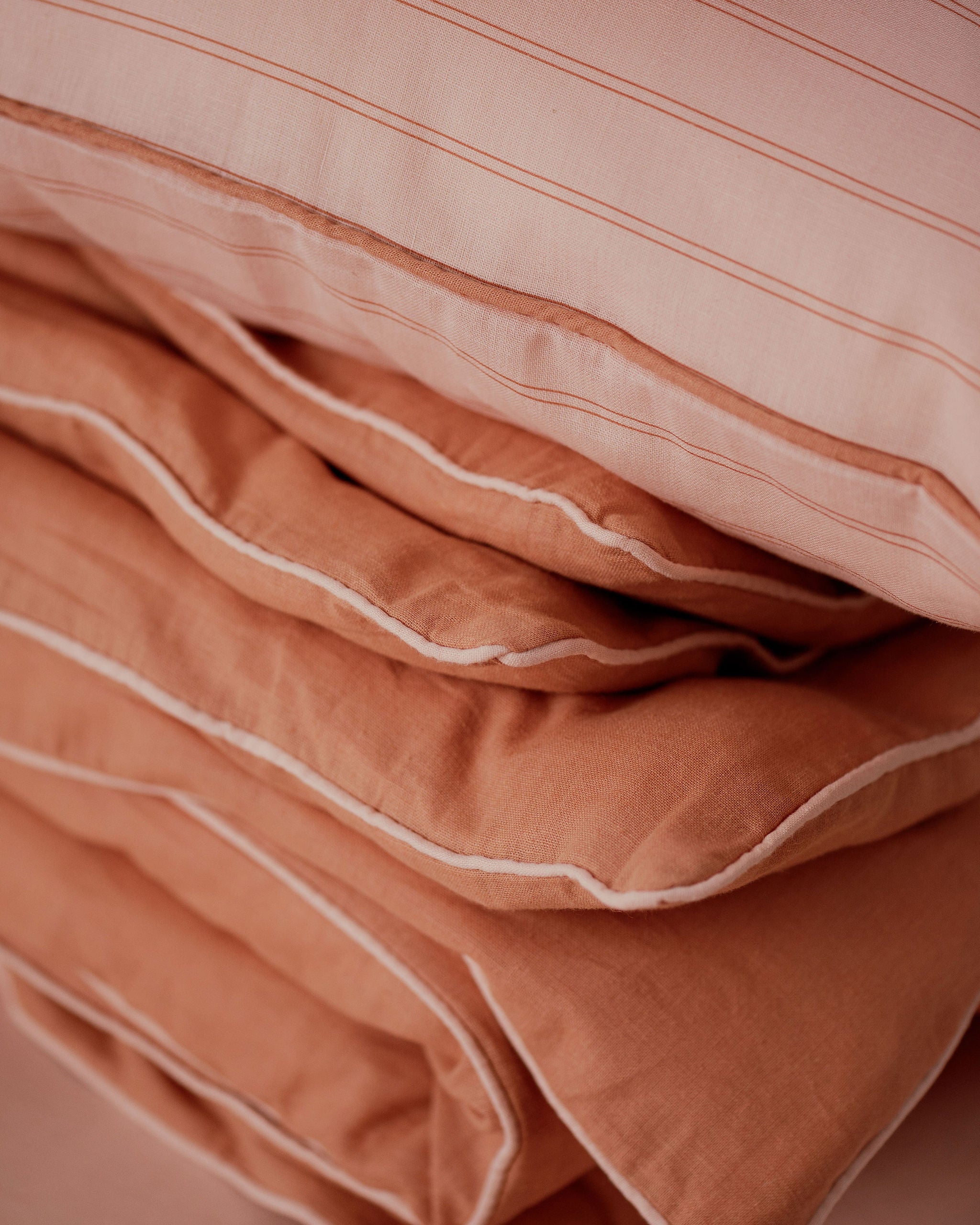
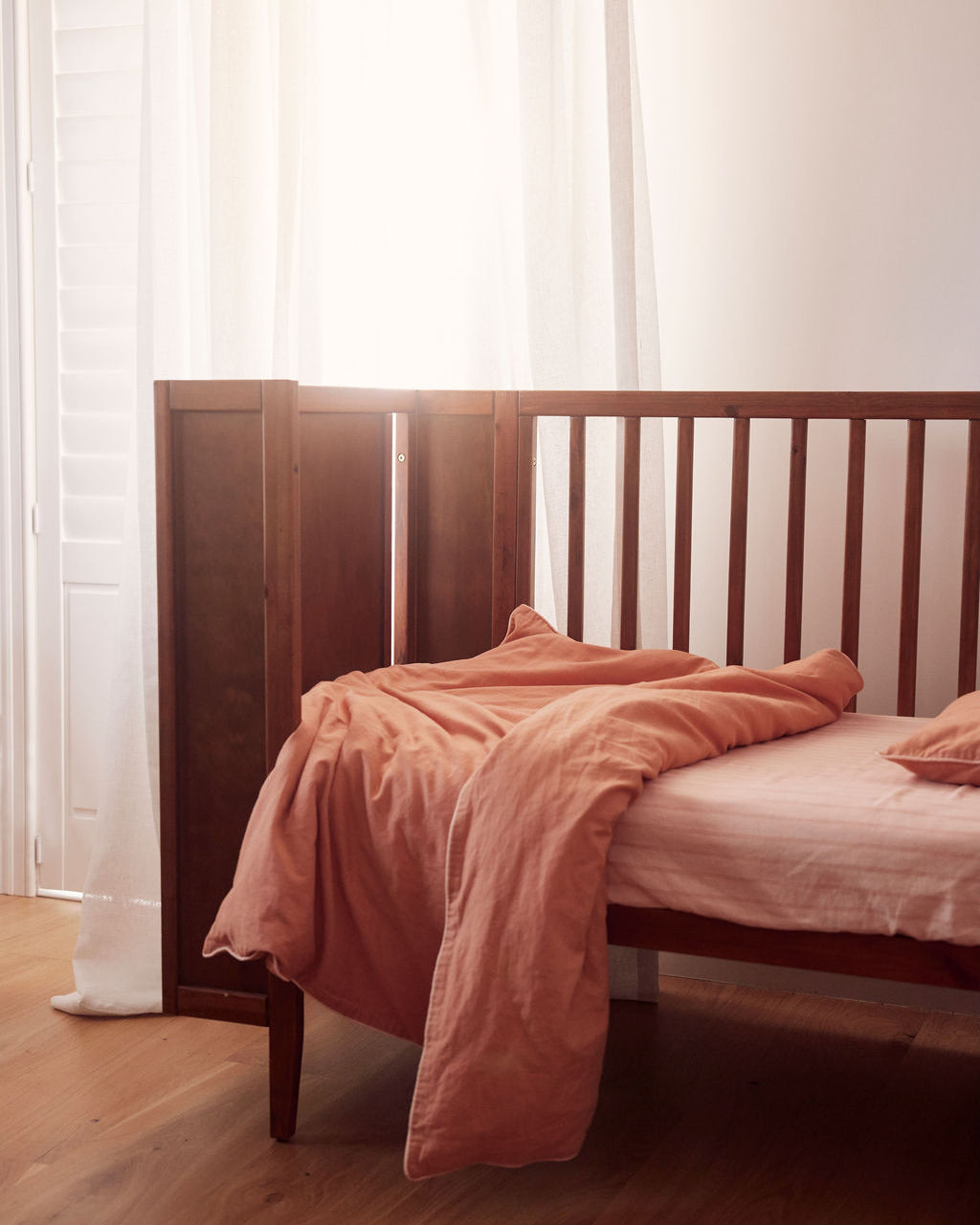
Every Minó colour sits within the desaturated, low-reflectance end of its family. The more muted the tone, the less the brain has to do at bedtime. Visual quiet is not an aesthetic preference. It is a physiological one.
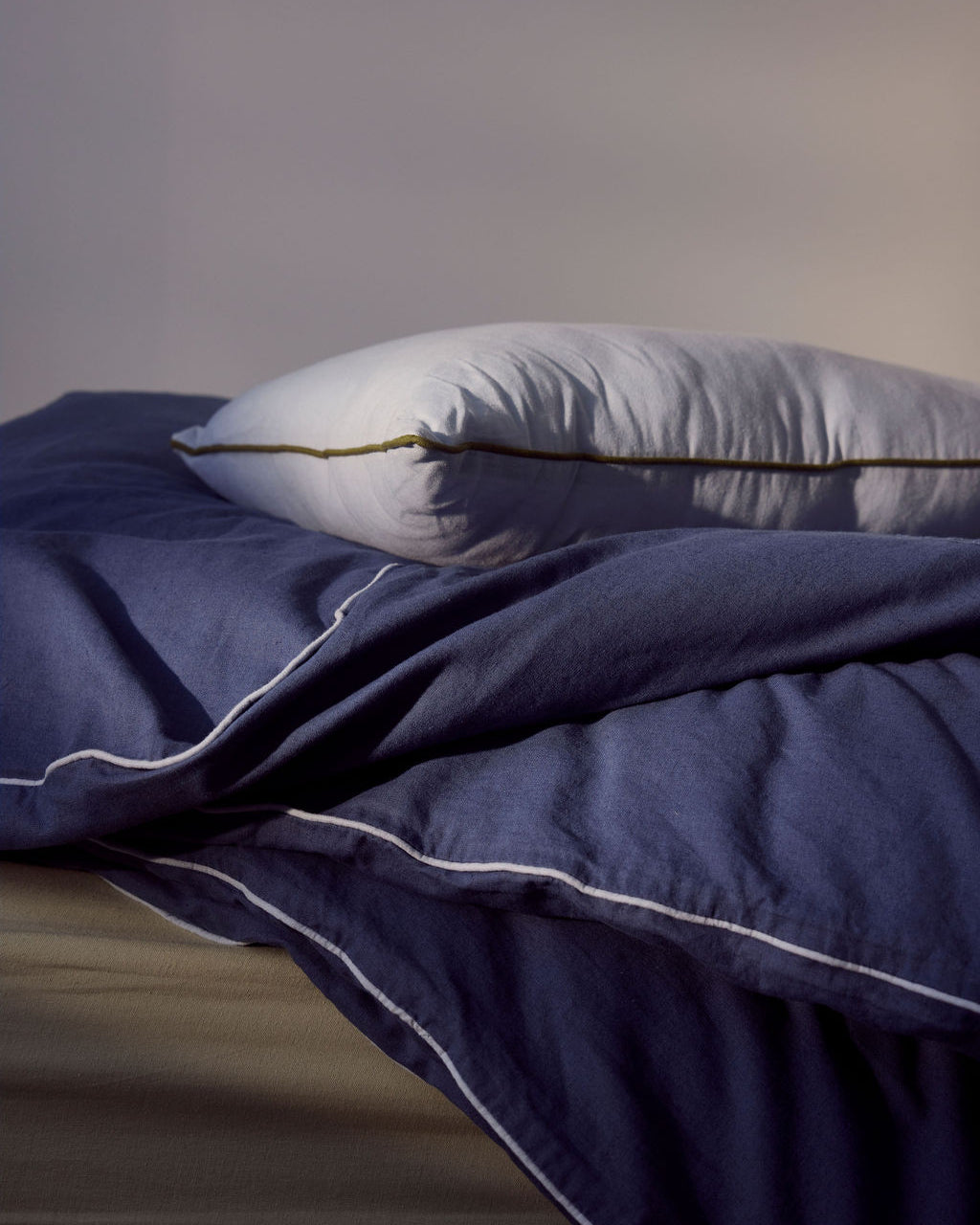
Soothing Blues
For children who can’t switch off, blues dim the chaos.
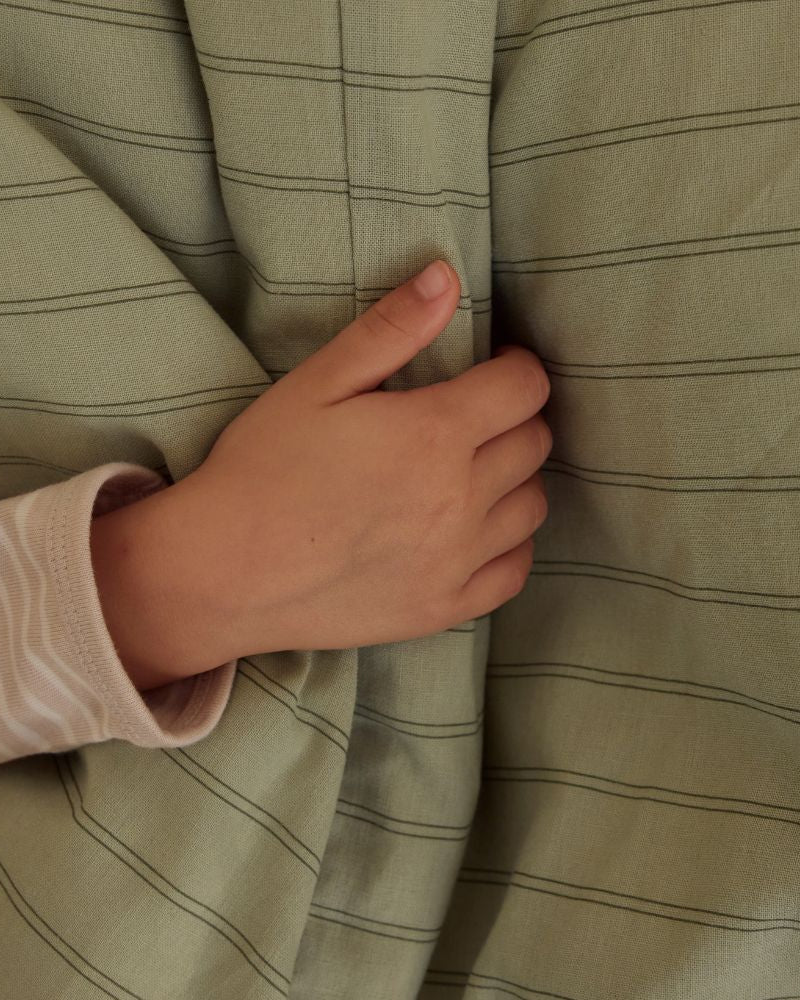
Natural Greens
For children who hold on, greens tell the body it’s safe to let go.
Soothing Blues
For children who can’t switch off, blues dim the chaos.
Natural Greens
For children who hold on, greens tell the body it’s safe to let go.
Cosy Pinks
For children with big feelings, pinks pull them close.

